

Cyberbullying: The Ongoing Crisis Plaguing Schools Everywhere
‘Being the different kid’ is no fun. You feel like an outsider. Most kids either stare at you or ignore you. You’re lonely. And worst of all, you get bullied, and no one stands up for you!’
For years, we’ve been seeing heartbreaking bullying stories in the news. We get all worked up at the time. Rally up behind the bullied kid. Then, our fervor gradually dies out. Until a new story comes along.
From this post, you’ll learn:
- What cyberbullying stands for, and how serious the problem is
- Five tactics to prevent cyberbullying at school
- How cybersecurity and online bullying are related
What is Cyberbullying or Online Bullying?
Over the past few years, bullying has evolved from the classic playground intimidation or ”cornering” to what’s now known as cyberbullying.
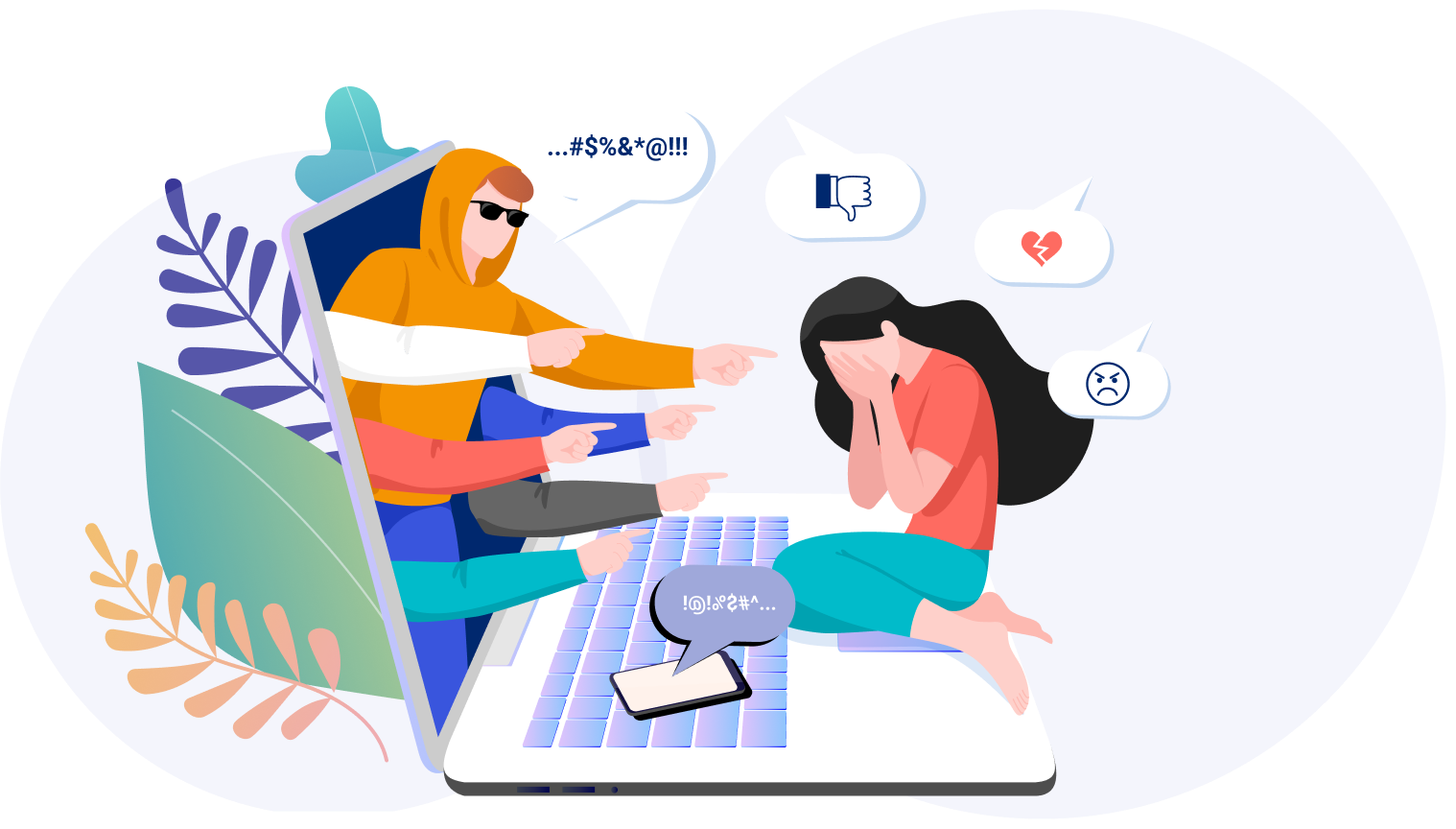
Cyberbullying, online bullying, or cyber harassment are all terms that describe the use of technology to taunt, threaten, annoy, or target another person.
According to CompariTech, online harassment is on the rise worldwide.
Online anonymity makes bullies more vicious because they believe they can’t be traced or reprimanded. This makes cyberbullying one of the most common forms of bullying nowadays.
How Big is the Problem?
Cyberbullies can hide behind a mask of anonymity online and do not need direct physical access to their victims to do unimaginable harm.
Inspirational speaker, writer and community leader Anna Maria Chavez
A Pew Research study found that nearly half, 46% of U.S. teens, experienced some form of cyberbullying. The most vulnerable are older teen girls.
Only four in ten teachers are good at helping students with online harassment. Additionally, one in three parents (33%) have been reported as not supportive enough when it comes to addressing cyberbullying.
The Effect of Cyberbullying on Students
Just like face-to-face bullying, cyberbullying can have destructive effects, including:
- Drops in school grades and/or loss of interest in education.
- Low self-esteem.
- Depression.
- Hostile behavior.
- Suicidal tendencies (Cyberbullying victims under 25 are more than twice as likely to self-harm and develop suicidal tendencies, according to a study).
Cyberbullying has effects beyond self-harm as well. A Javelin Research study explains that children who are cyberbullied are 9 times more likely to fall victim to identity fraud.
What Can Your School Do to Stop Cyberbullying?
School administrators can’t say it’s up to the parents. Parents can’t say it’s up to the teachers. Teachers can’t say it’s not their job. And kids can’t say, “I was too afraid to tell.” Every single one of us has to play our role if we’re serious about putting an end to the madness.
Megan Kelley Hall, Author of Dear Bully
As a cybersecurity company, we believe that we, too, have a part to play. That’s why we carefully curated the following five effective steps to help schools address cyberbullying (and bullying) at its root.
5 Proactive Steps to Stop Cyberbullying at Your School
1. Spot Cyberbullying Using Anti-Bullying Tools
The trickiest thing about cyberbullying is that it’s hard to notice.’
Teachers may not overhear it or see it taking place.
According to the Cyberbullying Research Center, ‘an average of 28% of teens report being cyberbullied’. Yet, there are many others who never even report it.
The good news is that your school can actually monitor and control cyberbullying using the right student monitoring tools like GAT:
▪️ GAT Shield: Protect your students by monitoring all browser-based activity. Set up real-time alerting for inappropriate content and cyberbullying keywords in all locations at all times.
GAT Shield also offers Chromebook monitoring, which greatly helps address cyberbullying carried out using school-owned Chromebooks. It allows for monitoring modern cyberbullying methods, such as AI-generated deepfakes and other AI misuse online.
▪️ GAT+: Audit, analyze, and report on all YouTube channels and videos your students are uploading and creating, with the option to block access to any inappropriate or harmful channels and restrict the students’ access to YouTube creation tools.
You can disable Chat whenever you feel that it’s being used as a cyberbullying tool at your school. To prevent further harassment via Google Docs, audit shared files regularly, searching for keywords related to harmful behavior and unusual edit history.
2. Teach Students about Cybersecurity and Being Safe Online
Raising students’ awareness about cybersecurity is imperative today, especially when they spend most of their time online.
Cybersecurity awareness sessions yield remarkable results in tackling issues like cyberbullying and online safety.
Consider offering them on a regular basis to tackle major things like how to spot, report, and deal with cyberbullying the right way.
These sessions should ideally provide students with a safe space to speak up, share their cyberbullying stories, and get help.
3. Understand Why Bullies Do It
Most often, bullies lose sight of the consequences of their actions. They can’t explain why they do it because they usually don’t think much about it. It’s our job to make them do it.
Helping kids move past outside appearance and empathise with each other on the inside is one of the first steps towards addressing bullying
Anti-bullying speaker, David Flood
Teaching kids about empathy, kindness, and inclusion early on can be one of the most effective ways to address bullying and promote a healthier school environment.
That can be incorporated into the curriculum through books, group activities, or anti-bullying speakers (depending on the age and grade).
4. Empower Bullied Kids to Cope Right
We’ve been taught that ignoring bullies is the best way to strip them of their power, and now we pass this advice on to our kids. However, we all know that executing this strategy isn’t always simple, whether in the physical world or online.
It is of utmost importance to let bullied children know that the school stands by them. They need to be assured that help is available to them – a secure haven they can turn to and a wise confidant they can trust.
5. Teach Kids to Recognize Bullying
You might be surprised by how often a child or teenager is unknowingly subjected to bullying by someone they consider a friend.
This form of bullying is among the most perilous, as the victim believes their “bully” is someone they can rely on, leaving a more profound emotional wound.
Additionally, there are times when kids jest or taunt others in hurtful ways without realizing that their behavior qualifies as bullying.
Bullying awareness campaigns are essential components of your school’s anti-bullying initiatives.
It is vital to educate students about identifying instances of cyberbullying, exploitation, manipulation, and other forms of harm, whether they are the recipients or the perpetrators.
Finally, I’ll leave you with this inspiring message by motivational education speaker Jeremy Anderson on inclusion: “It’s time to bring around a new culture in schools”.