
Lorem ipsum dolor sit amet, consectetur adipiscing elit. Ut elit tellus, luctus nec ullamcorper mattis, pulvinar dapibus leo.
- Identifying online risks to student mental health at an early stage is a priority in the technology-driven education world. Schools must particularly look for signals of cyberbullying and sexual abuse.
- Proactive risk control relies on real-time monitoring, automated early detection, and quick response. It also requires implementing and constantly improving online safety policies.
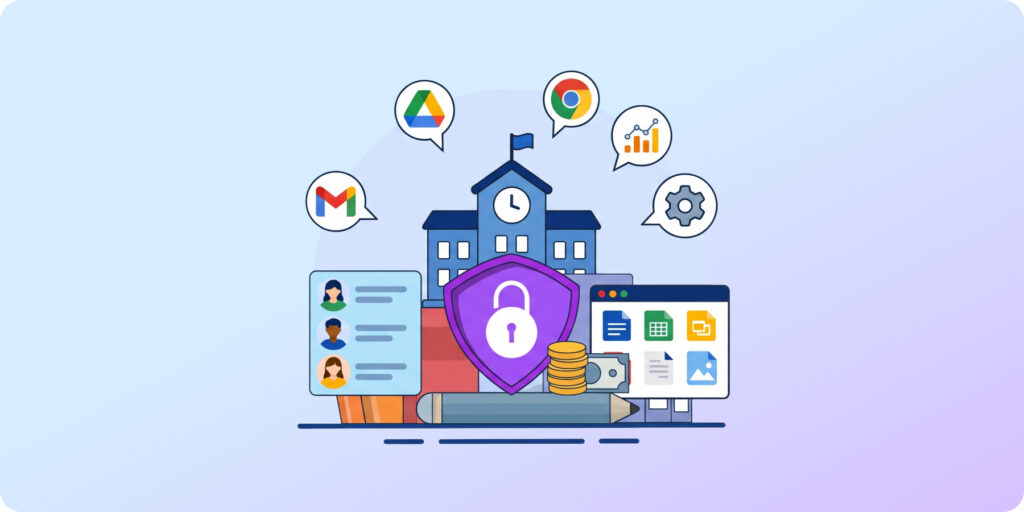
- Student online threat detection tools, such as GAT Shield, support admins and school staff in ensuring children’s online safety, recognizing harassment, restricting harmful content, and protecting sensitive data in the Chrome browser.
Today’s students live half their lives in the digital world. Daily use of search engines, social media, and AI apps in the classroom and beyond makes them more vulnerable than ever to safety risks.
This Mental Health Awareness Month, we explore how school admins can instantly detect potential online risks to student mental health in Google Workspace so children can get help on time.
Why Schools Should Act Right Now
Omnipresent technologies might create new online safety risks, but also help to detect them. Edtech solutions must take a zero-tolerance approach to reduce major threats to children’s well-being, the UNICEF Report “Childhood in a Digital World” indicates:
Online sexual abuse and online bullying have the strongest associations with risks to mental health. While the companies that manage technology platforms are not solely responsible for these issues, they can and must institute robust measures to identify, prevent, and mitigate child rights violations.
That’s why it’s crucial to vet every technology a school plans to use to ensure compliance with the highest safety standards. Educators and parents must be aware of these risks and oversee how children and teenagers navigate the internet.
While open communication is not always the case between students and adults, monitoring online activity is key to preventing mental health harm.
Reactive vs. Proactive Online Safety Risk Control
Every school IT team prioritizes protecting students from online threats, but their effectiveness often depends on how quickly they react: does it happen before or after an incident?
Another factor impacting risk management is whether admins only assess and learn from past experiences or proactively anticipate new risks.
A reactive risk manager will take action after detecting that a student searched for and watched an inappropriate video, then ban this URL for other users.
Instead, a forward-thinking admin implemented an extensive online safety policy a while ago and now is just monitoring emerging risks in real time.
| Online Safety Risk Control | ||
|---|---|---|
| Reactive | Proactive | |
| Main Goal | Mitigating incidents before they escalate and preventing them from repeating | Detecting risks early enough before they become incidents |
| Monitoring | Delayed or disruptive risk monitoring | Real-time, constant risk monitoring |
| Evaluation | Identifying the root cause of the risk and removing it | Evaluating common risks and implementing prevention policies |
| Effectiveness | Safety system gaps, late, and generic risk response | Risk management readiness, continuous safety improvement |
How to Detect Student Online Safety Red Flags
Staying proactive in identifying risks to students’ online safety and well-being will bring long-term benefits for students, admins, and the entire institution. This requires schools to understand potential yet common threats and to craft a thoughtful strategy to prevent and recognize them when they emerge.
What Are the Main Risks to Student Well-being Online?
Before taking steps to enhance student safety online, you need to be aware of what flags possible harm to their well-being. The most common disturbing online content falls under one of the following areas:
| Online Safety Risk | What to Look for |
|---|---|
| Cyberbullying | Personal harassment that can involve the use of real or AI-generated content to bully, stalk, shame, or exclude a student. It also includes hate speech, racist, and discriminatory language. |
| Harmful Content | Including pornographic, age-inappropriate pictures and videos, content related to violence, weapons, disordered eating, misinformation, etc.s |
| Anxiety and Depression | Distress potentially caused by harmful behavior mentioned above and other factors. Look for wording related to self-harm, suicide, low self-esteem, stress, and fear. |
How to Recognize Online Safety Risks with GAT Labs?
These are your basic guidelines for mitigating online risks to student mental health in Google Chrome and Microsoft Edge browsers. With GAT Labs, each of these points becomes a seamless task that takes only a moment to configure.
1. Restrict & Stay Compliant:
Block access to potentially harmful websites and online content, using a preconfigured CIPA-compliant category covering over 8 million sites and customizable keyword-based filters.
2. Control Data Security
Set automated alerts for suspicious or unexpected student online activity (e.g., file sharing, downloads, third-party app installations, and access requests). This can stop students from sharing sensitive data with unvetted online tools or unauthorized users.
3. Avoid AI Threats
Schedule alerts for potentially risky use of AI online tools. Instead of blocking them entirely, get a notification when a student uploads a picture or personal information to the chatbot in order to generate a deepfake or inappropriate content.
4. Stay on Top of Everything
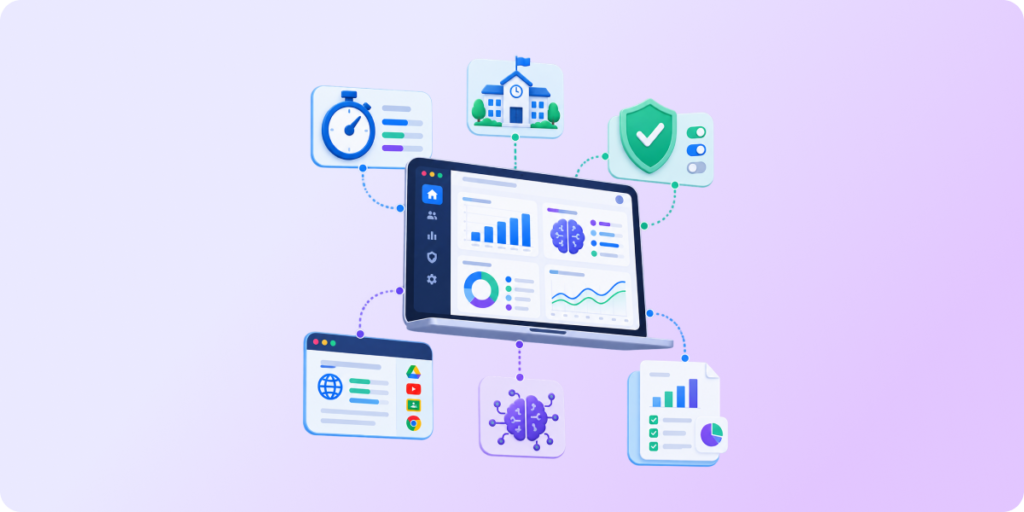
Oversee all Chrome activity for each student while they are logged in with their Google account. Proactively flag actions and keyword searches related to safety issues and generate reports for parents and mental health professionals.
All GAT Labs functionalities are applicable in the Chrome browser for all user accounts in the Google Workspace for Education domain.
Read more about automated web filtering to save you time and headaches:
Why Early Online Safety Risk Detection Matters for Schools
Identifying online safety risks in the classroom on time is key to maintaining a highly effective learning environment, focused students, and motivated teachers.
And most importantly, it gives admins a complete, up-to-date picture of potential data security and compliance threats and the time to address them.
▪️ Students:
The most vulnerable group is safer now when their online activity is under continuous control. Restricted access to inappropriate websites, online content, and tools protects their mental health. Safety-oriented monitoring detects attempts to access harmful content or unintentional exposure to it, so educators and parents can address the issue.
▪️ IT Teams:
Detecting an online safety risk quickly enables admins to react before it spreads across the school or escalates into a data security incident. Automated risk detection and real-time monitoring optimize the daily work of IT teams, alerting them only when a threat is detected. Automation saves their time and resources, allowing them to focus on improving policies and incident response plans.
▪️Teachers & School Principals:
With the latest insights into students’ online activity, school staff can often uncover hidden well-being struggles. That helps them to personalize learning and support students in their personal challenges. Online safety oversight and quick risk response improve the institution’s trustworthiness in the local community and compliance readiness.
Check out our strategies for creating a safe online learning environment at your school:
Final Thoughts
The best admins aren’t just reacting; they stay ahead of the risks students may encounter online. Reinforce your monitoring, detection, and response capabilities for ultimate student online safety. Stay in control and gain full visibility into Google Workspace for Education.
Start protecting your students today. Book a demo for a GAT Labs walkthrough.
Join our newsletter for practical tips on managing, securing, and getting the most out of Google Workspace, designed with Admins and IT teams in mind.