
Simplify DSAR Compliance in Google Workspace
Need to process a Data Subject Access Request (DSAR) in Google Workspace? GAT Labs makes it faster, safer, and fully auditable. Without relying solely on Google Vault.
Trusted by Thousands of Organizations and Protecting Millions of Users

GDPR Compliant
ADA Casa Tier 3
DSAR Requests in
Google Workspace
Are Time-Consuming
- No DSAR-specific workflows
- No automation or approval routing
- Limited search filters
- No file previews before export
- Manual, time-consuming reviews
A Better Way to Handle Google Workspace DSARs
GAT Labs gives Google Workspace admins and DPOs a complete toolkit for handling access requests to the live environment securely and efficiently.
Search Across Your Entire Google Workspace
Find all personal data across Gmail, Drive, Calendar, Contacts, and more.
All from one interface.
Use advanced filters to narrow by:
- File type, label, or folder path
- Ownership or shared status
- Time range or keyword
- External vs internal access
Preview Before You Export
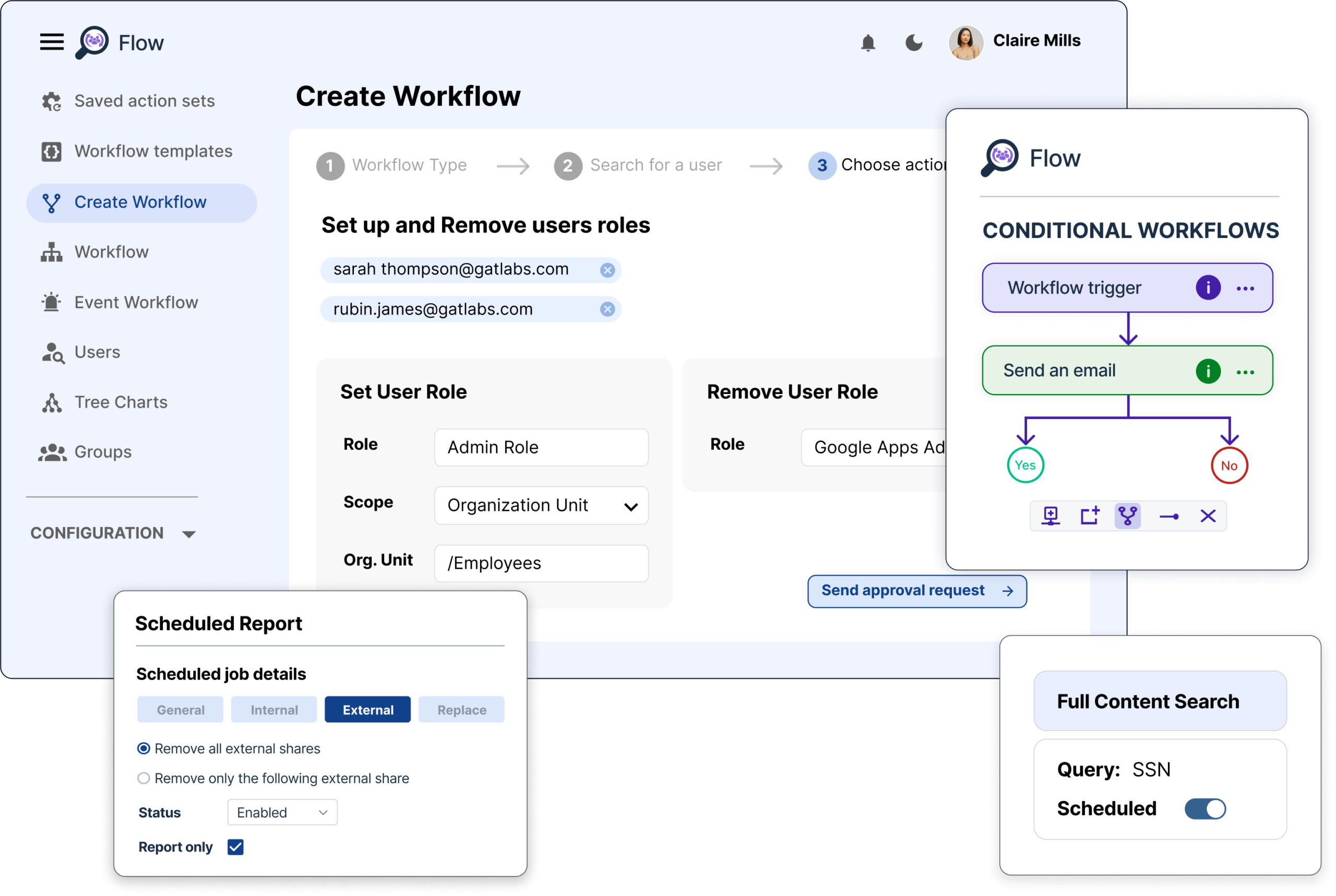
Request Secure Access with Approval
Export Only What You Need
Built for Security and Compliance
Every action is logged. Every export is controlled. GAT Labs provides:
- Immutable audit trails
- Role-based access controls
- Approval workflows for sensitive content
- Full compatibility with your privacy policies and legal obligations
GAT Labs vs Google Vault for DSARs
|
Features
|
GAT Labs
|
Google Vault
|
|---|---|---|
|
Full Workspace Search
|
|
Limited
|
|
Preview Before Export
|
|
|
|
Approval Workflow
|
|
|
|
Audit Logs
|
Granular
|
Basic
|
|
Automation
|
Scoped
|
|
Don't Just Compare.
Get Compliant.
You’ve seen the gaps in a manual Data Subject Access Request (DSAR) process. Now take the next step.
Download our checklist to assess your team’s readiness and stay prepared for every request.
Solve Your DSAR Challenges: Expert Guides for Google Admins
Beyond the Basics: Automating DSARs and Google Vault with GAT Flow
Tired of manual DSARs turning into a compliance nightmare? You’re not alone. Managing these requests is a critical job, but without the right tools, it’s a time-consuming, error-prone scavenger hunt.
Learn how to move beyond the manual limits of Google Vault and use automation to create a streamlined, legally defensible workflow that saves you valuable time.
DSAR in Google Workspace? Here’s How to Handle It Without Panicking
Navigating a Data Subject Access Request (DSAR) is a complex, high-stakes task for any Google Workspace Admin.
But it doesn’t have to be.
This is the guide you’ve been looking for. We’ll show you exactly how to handle a DSAR in your Google Workspace environment, giving you the tools to get it done right and get it done fast.
DSAR in Google workspace
Frequently Asked Questions
The biggest challenge is the manual, time-consuming nature of the process. Data is often scattered across multiple services (Gmail, Drive, Chat), and the native tools require a lot of manual searching, exporting, and management, which increases the risk of human error and non-compliance.
Yes. GAT Flow allows you to create a simple, automated workflow that applies a legal hold to any user’s account. This is particularly useful for offboarding, as it ensures data is not accidentally purged the moment a user leaves your organization.
Yes. GAT Flow automatically handles your Google Vault exports. It can build a precise export workflow and, more importantly, it can automatically upload the exported data to a secure Shared Drive. This eliminates the need for manual downloads and provides a centralized, secure location for your legal and compliance teams to access.
No. Vault and GAT+ serve different roles in DSARs. Vault is your historical record, keeping data even after deletion. GAT+ gives a live, detailed view of your current environment to audit and delegate access. Together, they provide the most complete approach.
Your DSAR Solution is
One Click Away.
Don't let compliance be a source of stress. Join thousands of Google Admins who are already saving time and ensuring data privacy with our automated workflows.
