
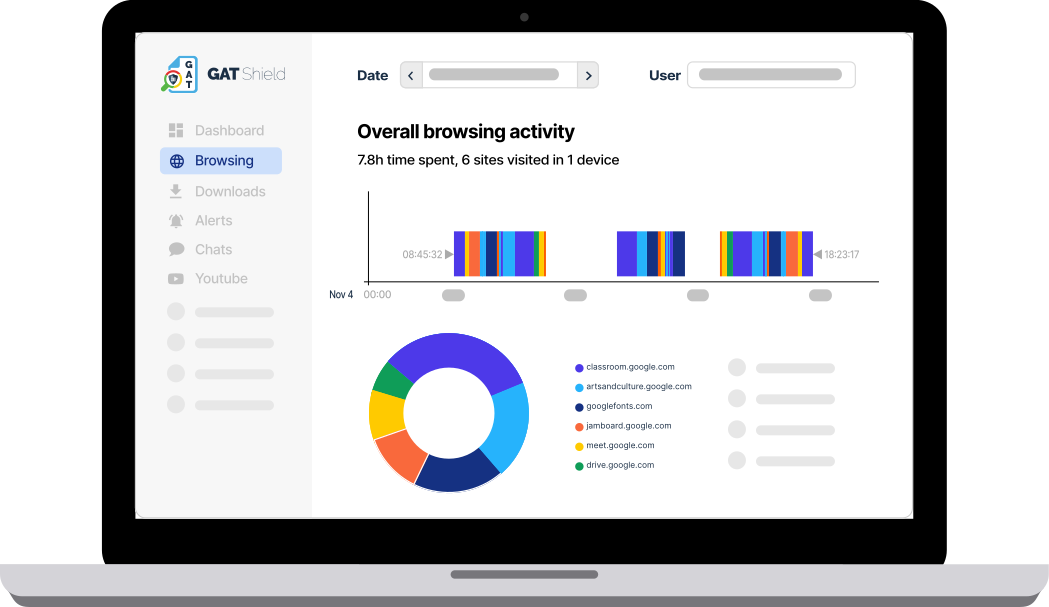
Uncontrolled Google Workspace licenses can quickly lead to spiralling costs. This blog equips IT admins and business managers with expert tips to optimize their Google Workspace spend.
The need for optimization is greater than ever. With Google recently integrating high-cost AI features (like Gemini) into core Workspace subscriptions, resulting in price adjustments, IT budgets are under continuous strain. Ignoring inactive accounts or outdated retention policies is no longer sustainable.
Identifying Cost Optimization Opportunities:
1. Optimize Storage & Reduce Google Workspace Spend
One of the most straightforward ways to trim license costs is by pinpointing inactive accounts holding full Workspace licenses.
The challenge lies in accurately determining truly inactive accounts. Unfortunately, simply checking for user accounts that have not logged in for a long period of time is often insufficient. For example, you might have accounts inactive for over a year, yet still functioning as Shared Mailboxes through delegate access.
To effectively identify truly inactive accounts, consider these advanced metrics:
- ▪️ Last login activity
- ▪️ Last IMAP/POP access time
- ▪️ App-specific passwords
- ▪️ OAuth2 tokens
- ▪️ Gmail delegates (Admin console unavailable, easily reported with GAT+)
- ▪️ Email forwarding settings (Admin console unavailable, easily reported with GAT+)
- ▪️ Sent/received email activity (Admin console unavailable, easily reported with GAT+)
- ▪️ Google Drive event log history (Limited history in Admin console, full history available in GAT+)
With the above information, you will be able to determine the exact time the account was last actively used or if the account is being used by a 3rd party application. This enables Google admins to make a more informed decision about license revocation or user deletion.
2. Manage Google Workspace Licenses Efficiently (AU Alternatives)
Organizations retaining employee departure data often utilize Google Archived User (AU) licenses to ensure data preservation without incurring full Workspace license fees. While less expensive, these licenses can still be a significant cost factor, particularly for organizations with high turnover or lengthy data retention policies.
Here are cost-effective alternatives to Archived User licenses, enabling you to maintain departed employee data while reducing costs:
| Alternative Strategy | Pros | Cons |
| Export data via Google Vault | Retain a full archive including MD5 hashes to evidence data integrity. Includes deleted files/emails. | Archived data is compressed and must be unzipped to be searchable. High security risk and bandwidth drain when done manually. (Note: Fully automated in GAT Flow). |
| Transfer the leaver’s data to a Shared Drive | Easily manage access and apply strict sharing policies. File metadata and full revision history are maintained. | Not supported natively in the Google Admin console, requiring high manual effort. (Note: Automated in GAT Flow with email and Drive migration). |
| Transfer to another user/manager | Shared files continue to be available to viewers and collaborators. File metadata and full revision history maintained. | Deleted files and emails cannot be transferred. Performance issues when a manager owns over 1 million files. Risk of mixing private/confidential data. |
While some find these alternatives cumbersome due to manual effort, tools like GAT Flow can fully automate these processes, streamlining offboarding and reducing license wastage.
3. Streamline Storage for Lower Google Workspace Spend
Depending on your Google Workspace plan, you might have purchased additional storage licenses to increase your overall pooled quota. Identifying data suitable for deletion within the Admin Console can be difficult.
However, tools like GAT+ enhance your visibility and provide in-depth insights into your organization’s data usage patterns.
GAT+ helps you to generate reports on the following, aiding in pinpointing files suitable for deletion:
– Users consuming the most storage.
– Inactive files (unaccessed for extended periods).
– Files exceeding a specific size threshold (e.g., videos, old backups).
– Filtering by file type.
Once you’ve identified suitable data for deletion, GAT+ File Management allows you to:
– Notify users about inactive, large files they own, requesting deletion (encouraging self-service cleanup).
– Transfer ownership of these files to a temporary account for deletion. This automatically purges these files from your Workspace domain, reducing storage usage and potentially lowering the number of additional storage licenses needed.
4. Maximize License Value: Use Aliases and Groups
Don’t pay for user accounts that function solely as department mailboxes or alternate addresses.
– Convert Generic Accounts: If you have full user accounts for roles like sales@yourdomain.com, support@yourdomain.com, or billing@yourdomain.com, convert them to Google Groups (specifically a Collaborative Inbox). This allows multiple users to manage the address without requiring a dedicated, full-cost license for the generic email account.
– Utilize Email Aliases: For individuals who need multiple addresses (e.g., a user who handles marketing@ and social@), assign these as Aliases to their single, paid user account. This provides up to 30 alternate addresses per user at no extra cost—a huge saving over paying for multiple individual licenses. (Note: Aliases cannot be shared by multiple users.)
The Bottom Line
Over time, Google Workspace license costs can easily spiral upwards. Many organizations struggle to maintain control over their spending, especially as Google integrates new, premium features into its core plans.
Utilizing tools like GAT+ to uncover cost-saving opportunities through comprehensive auditing and GAT Flow to automate necessary steps for managing Google Workspace expenses empowers you to free up valuable IT resources and significantly reduce overhead costs.
Remember, the ideal approach hinges on your specific requirements. Regularly reviewing your usage and implementing these processes ensures your organization only pays for what it truly needs.