Executive Summary
Most enterprises unknowingly carry 10% to 20% in license waste from full-cost “Ghost Accounts”. Unlike Archived User (AU) licenses, these active accounts remain billable long after a user departs or a project ends. By implementing a structured Google Workspace audit, organizations reclaim this spend and eliminate unmonitored security entry points without disrupting daily operations.
The Oversight That Quietly Costs Thousands
In many organizations, the Google Workspace bill grows incrementally because user changes outpace manual review cycles. While previous guides have covered optimizing storage and managing archived licenses, the most expensive oversight is often the “Ghost Account”, a full Enterprise license assigned to a user who hasn’t logged in for months. Without deep visibility, these accounts remain active and billable indefinitely.
Why Inactive Google Workspace Accounts Matter
Beyond the financial burden, inactive accounts present a governance challenge. An unused account may still own sensitive files, retain access to Shared Drives, or have active credentials that represent an unmonitored entry point into the domain. For security and compliance officers, every unmanaged account is a liability. This is why leading organizations treat the Google Workspace audits as a core security practice rather than an occasional cleanup.
From a compliance perspective, inactive accounts can also create issues for organizations aligned with standards like ISO 27001. Controls around access management, user lifecycle, and least privilege all assume that accounts are reviewed, justified, and removed when no longer needed. Leaving inactive users licensed and accessible makes it harder to demonstrate effective access control during audits.
How Inactive Accounts Accumulate
License waste builds gradually through routine activities:
- Offboarding Gaps: An employee leaves, but their account is left active to “monitor” incoming emails.
- Temporary Users: Contractors or seasonal staff finish their roles, but their licenses are not reclaimed.
- Ghost Accounts: Test accounts created for specific integrations or migrations remain active long after the project ends.
A Framework for a Professional Google Workspace Audit
Running a Google Workspace audit does not need to be complex. What matters most is consistency.
Step 1: Define inactivity
Start by deciding what inactivity means for your organization. Many teams use a threshold of 45, 60, or 90 days without login or app activity. The exact number matters less than applying it consistently.
Step 2: Review user activity
In the Google Admin Console, review indicators such as last sign-in date, Gmail usage, Drive activity, and recent file edits. These signals help separate active users from accounts that are no longer in use.
Step 3: Categorize accounts
Group users into active, inactive, and under review. For accounts marked inactive, confirm with the relevant manager before taking action.
Step 4: Take action
Once confirmed, suspend or deactivate inactive accounts, transfer ownership of important files, and reclaim or reassign licenses. Many organizations complete this process in a single session and see immediate savings.
To maintain long term control, admins can set up automated alerts in GAT+ to notify them specifically when an account has not been used for a defined period or when storage quotas are exceeded.
Making Google Workspace Audits Routine
One-time cleanups offer temporary relief, but sustainable control requires automation. Aligning Google Workspace offboarding with HR triggers ensures that as soon as a user departs, their license is reviewed. Scheduling these reviews quarterly prevents license waste from accumulating and ensures the domain remains compliant.
Where Admins Save Time and Money With GAT Labs
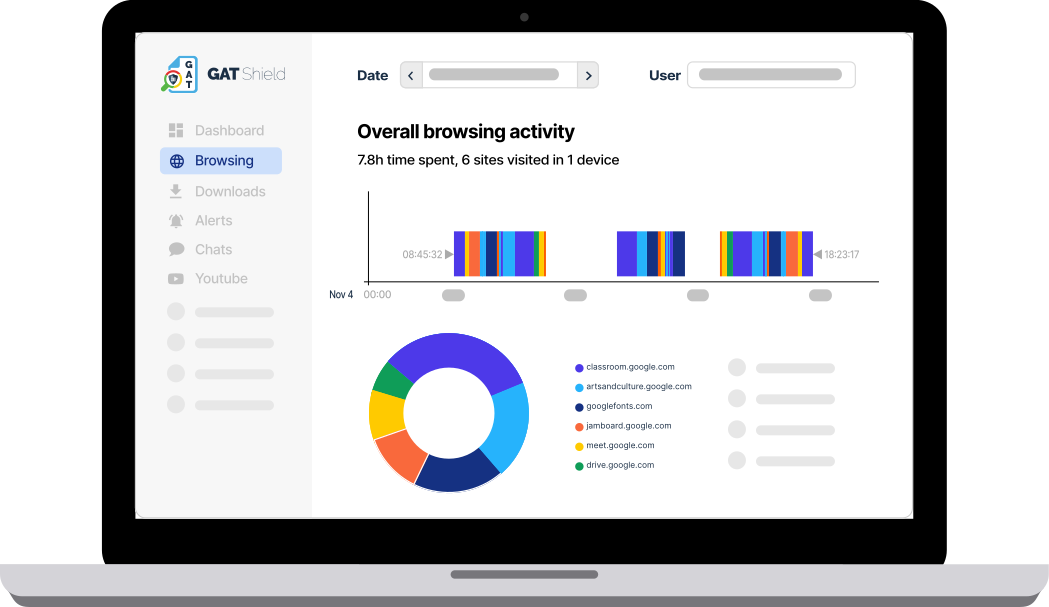
Manual audits are time-consuming and prone to human error. GAT+ provides a unified view of user activity across Gmail, Drive, and all Workspace applications, allowing admins to pinpoint inactivity instantly.
For sensitive actions, such as accessing an inactive account’s Gmail or Drive content for a final audit, GAT Labs provides a more secure path than native tools. GAT Unlock is a Multi-Party Approval system that works alongside GAT+ to let Google Workspace admins perform sensitive actions with full accountability. Any access request requires approval from a second person, known as a Security Officer. This enforces a consistent two-person approval process and creates a clear audit trail showing who requested and accessed data.
This level of visibility and control also supports ISO 27001 requirements by providing clear evidence of access reviews, ownership validation, and consistent user lifecycle management.
Many enterprises discover immediate Google Workspace cost savings of 10% to 20% during their first audit with GAT Labs tools.

The Value Beyond Cost Reduction
Removing inactive Google Workspace accounts does more than reduce spend.
A clean environment improves reporting accuracy, simplifies compliance reviews, and reduces unnecessary access. It also builds trust across IT, finance, and HR by showing that licenses, users, and data are actively managed.
When your Workspace environment reflects the real structure of your organization, everything becomes easier to operate and explain.
Key Takeaways for Admins
Inactive Google Workspace accounts are one of the simplest and most overlooked sources of waste and risk. Regular audits help you regain control, reduce Google Workspace costs, and strengthen security without disrupting daily work.
Start by defining inactivity, reviewing user activity consistently, and making audits a routine. When scale or complexity increases, tools like GAT Labs help automate the process and maintain long-term accuracy.
Good auditing is not about cutting costs for the sake of it. It is about running a clean, predictable, and well-managed environment.
FAQ: Inactive Google Workspace Accounts
1. What is an inactive Google Workspace account?
An inactive Google Workspace account is a licensed user account that has not logged in or used Workspace services such as Gmail or Drive for a defined period.
2. How often should admins audit inactive accounts?
Most organizations benefit from quarterly audits, with alerts for accounts inactive for 45 to 90 days.
3. Do inactive accounts pose security risks?
Yes. Inactive accounts may still retain access to files, shared drives, and email. If credentials are compromised, these accounts can be exploited without being noticed.
4. How do inactive accounts affect ISO 27001 compliance?
Inactive accounts make it harder to demonstrate effective access control and user lifecycle management, which are core ISO 27001 requirements. Regular audits and documented cleanup help show that access is reviewed and removed when no longer justified.