
For many Google Workspace Admins, security feels like a battle focused on the front door. You spend significant resources on SSO and MFA to keep unauthorized users out. However, the modern threat landscape has shifted. A recent global cybersecurity report highlights a growing gap between companies that rely on basic tools and those that have deep visibility into their data environments. Organizations are increasingly vulnerable because they lack a clear view of how their data is shared internally and externally.
Identity-based attacks against cloud environments remain a primary threat. In fact, the time between a vulnerability being disclosed and its active exploitation has dropped significantly. Some attackers move from initial access to full impact in an average of just 2.3 hours.
What is the “Blast Radius”?
The Blast Radius measures the total volume of data an attacker can access, delete, or exfiltrate after compromising a single account. In Google Workspace, “permission sprawl” defines this limit. Specifically, files shared via public links, over-privileged “Editor” roles, and forgotten folders shared with external vendors. A large blast radius allows one compromised intern to inadvertently hand an attacker the map to your entire corporate Drive.
Once inside, the real danger is this lateral movement. In a typical organization, permissions grow organically. A single project folder shared with “Anyone with the link” years ago remains active. If one user account is compromised, it becomes a map for an attacker to move across your entire domain.
The Visibility Gap in Native Admin Tools
The native Google Admin console provides a high-level overview, but it often lacks the deep visibility required to see the true extent of this exposure. It is difficult to see exactly what is shared, with whom, and when it was last accessed across thousands of users. This visibility gap is exactly what ransomware thrives on. To secure your domain, you need to be able to audit and analyze these permissions with precision.
GAT+ addresses this pain by providing file-level visibility across your entire Google Workspace environment.
You can quickly identify every file shared with external domains or accessible via public links. Instead of wondering where your data is leaking, you can run detailed audits to see the exact scope of your risk. If you find thousands of files shared with a former partner or an outdated project, you can take bulk action to remove those shares, update metadata, or change ownership in a few clicks.
The Executive Target: Why Hierarchy Matters to Attackers
The modern Blast Radius is not just about the number of files exposed. It is about who owns them. Sophisticated campaigns demonstrate a deep understanding of organizational hierarchy, with finance personnel and executive users representing 67% of individuals targeted. These profiles are the high-value keys to the kingdom, often possessing the broadest Owner permissions over sensitive company data.
This focus on leadership is compounded by the fact that attackers are increasingly effective at bypassing the very tools designed to protect them. While we encourage all admins to enforce 2-Step Verification, it is important to acknowledge that not all MFA is equal. Recent analysis shows that traditional methods are struggling to keep up:
– SMS and Voice Verification: These methods now show a 23% bypass success rate for attackers.
– Mobile Authenticator Apps: These maintain an 8% bypass vulnerability.
– FIDO2 Security Keys: These remain the gold standard, maintaining less than 1% bypass rates.
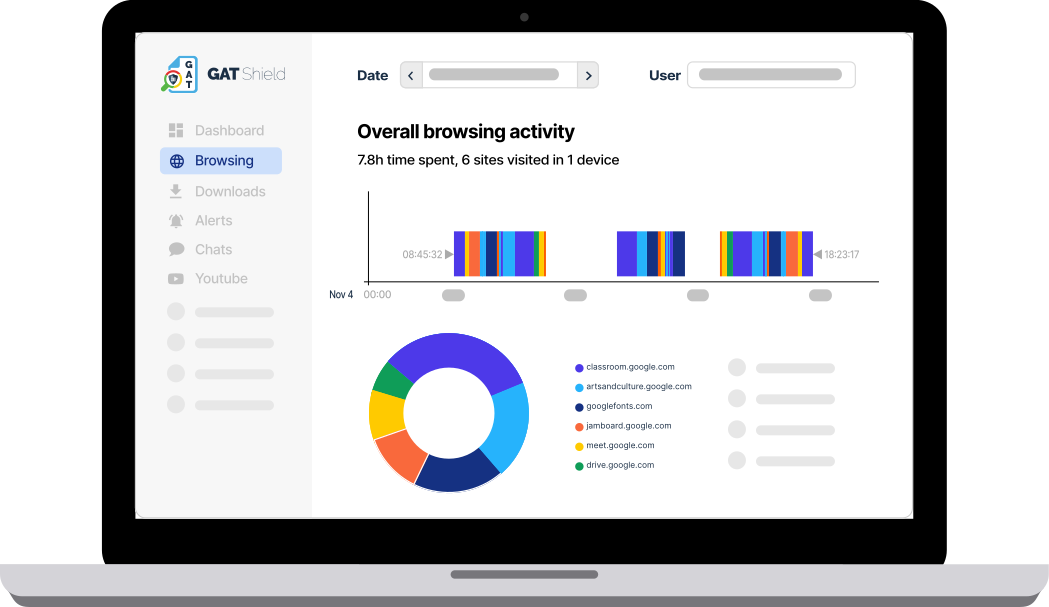
A layered defense is no longer optional. GAT Shield addresses the gap between authentication and activity by extending security controls into the active browser session. Even if MFA is bypassed, Shield continues to monitor and control browser session activity based on predefined alert rules.
If suspicious file activity or unauthorized downloads occur, Shield can block actions, close pages, or generate alerts in real time, limiting the impact regardless of how access was initially obtained.
Automating the Cleanup
Security governance should not be a manual task that wastes your afternoon. Exfiltration speeds for the fastest attacks have quadrupled, with some reaching impact in as little as25 minutes. By combining the auditing power of GAT+ with the automation of GAT Flow, you can build secure workflows that handle these risks for you.
For example, you can set up a workflow that automatically flags or removes external access to files that have not been touched in a certain number of days. You can also create approval-based loops through GAT Unlock to ensure that even access to sensitive documents requires a second person’s approval, a “Security Officer”, adding a layer of accountability that protects both the user and the admin.
Monitoring the Final Frontier: The Browser
While file permissions are critical, the browser itself is often a blind spot for many Google Workspace admins. Data exfiltration and malware infections frequently occur through unsafe downloads, risky browser extensions, or visits to high-risk websites.
Chrome Browser Extension products like GAT Shield extend your security visibility, allowing admins to monitor browsing activity, detect risky behavior, and enforce policies directly at the browser level. Admins can block unsafe downloads, restrict websites, or immediately close tabs when a policy violation occurs.
This added layer of control helps prevent sensitive data from leaving the organization through the browser and gives admins the ability to respond quickly when suspicious activity is detected.
Google Workspace Ransomware FAQs
1. How does GAT+ differ from the standard Google Workspace audit logs?
The standard console has limited visibility and action control. GAT+ offers deeper auditing across Drive, Gmail, and Calendar, allowing you to take action at scale.
2. Is MFA enough to stop a Google Workspace ransomware attack in 2026?
No. While MFA is essential, it is no longer a silver bullet. Current data shows that SMS-based MFA has a 23% bypass rate, and even mobile apps have an 8% vulnerability to “MFA fatigue” and session hijacking. Once an attacker bypasses the “front door,” they exploit your Blast Radius: the years of organic permission sprawl that let them move laterally. To truly secure your domain, use the deep, file-level visibility of GAT+ to find and kill those hidden paths before attackers exploit them.
3. How fast can a Google Drive ransomware attack reach “full impact”?
The window is closing faster than ever. Current data shows attackers can move from a single compromised account to full domain impact in an average of 2.3 hours, with the fastest exfiltration attacks reaching impact in just 25 minutes. Relying on manual audits is no longer viable; you need real-time browser monitoring and automated cleanup workflows to stop the clock.
4. What is the “Blast Radius” in a Google Workspace attack?
The Blast Radius measures the total volume of data an attacker can access, delete, or exfiltrate after compromising a single account. In Google Workspace, “permission sprawl” defines this limit. Specifically, files shared via public links, over-privileged “Editor” roles, and forgotten folders shared with external vendors. A large blast radius allows one compromised intern to inadvertently hand an attacker the map to your entire corporate Drive.
Insights That Matter. In Your Inbox.
Join our newsletter for practical tips on managing, securing, and getting the most out of Google Workspace, designed with Admins and IT teams in mind.