Executive Summary
A Google Workspace security incident creates a financial impact long after the initial breach. The global average cost of a data breach in 2025 was $4.44 million, and in the United States, it reached $10.22 million, driven by investigation effort, regulatory exposure, and slow containment.
The real cost of a Workspace incident is shaped by how quickly admins can identify affected users, remove access, and remediate exposed data. Automation and user lifecycle management reduce response time, limit exposure, and lower both operational and financial impact.
What a Google Workspace Security Incident Really Costs
A Workspace incident rarely ends with one compromised account. The cost begins when admins must determine what happened, what data was exposed, and which users or applications were involved.
Recovery includes locating malicious emails, reviewing file access, revoking OAuth permissions, and documenting actions for compliance. These tasks often require switching between tools and exporting logs.
Industry breach cost studies show that slow detection and manual remediation significantly increase the financial impact of incidents, especially when multiple services like Gmail, Drive, and third-party applications are involved.
In Google Workspace, incidents commonly span Gmail, Drive, and connected apps. Each layer increases the time and labor required to resolve the incident.
Why Manual Remediation Becomes Expensive
Native Google tools provide visibility, but remediation is largely manual. Admins must search mailboxes, review file permissions, and suspend accounts one by one.
This creates three problems.
– First, the response is slow.
– Second, actions vary between admins.
– Third, documentation is fragmented.
The longer remediation takes, the more time attackers have to access data or move laterally. Delayed cleanup also increases investigation and compliance workload.
Time spent responding manually is one of the largest contributors to breach cost.
Many organizations respond to security gaps by upgrading Google Workspace licenses. While higher tiers provide additional logs and storage, they do not automate remediation or reduce the manual work required during an incident. Visibility without action still leaves admins performing cleanup account by account.
How Automation Reduces Remediation Time and Risk
Automation shortens incident response by allowing bulk actions instead of individual cleanup.
Admins can remove phishing or spam emails across all mailboxes at once, revoke risky app permissions centrally, and apply access changes consistently. Actions are logged automatically and can be reviewed later.
Faster detection and containment lower labor costs, limit data exposure, and shorten operational disruption.
Lifecycle Management Reduces Incident Impact
The size of an incident depends on how much access exists when it occurs.
- – Inactive users, orphaned files, forgotten OAuth apps, and unused service accounts increase exposure.
- – Files owned by former employees remain reachable.
- – Old permissions remain valid.
User lifecycle management reduces this risk by enforcing consistent access control. Automated offboarding removes access when someone leaves.
- – Ownership transfers prevent orphaned data.
- – Periodic reviews reduce excess privileges, and inactivity thresholds identify accounts that should no longer exist.
Dormant OAuth applications add another layer of exposure and should be reviewed regularly as part of access governance.
Secure Remediation Prevents Secondary Risk
A fast response alone is not enough. Security teams must control sensitive actions such as accessing mailboxes, transferring file ownership, or deleting content.
Without oversight, remediation can create compliance and audit problems. Actions must be authorized, logged, and reviewable.
Multi-party approval ensures that no single admin can access sensitive data alone. Each action requires authorization and creates a permanent record.
This protects the organization and the admins performing remediation.
How GAT Supports Automated Incident Response
GAT Labs extends native Google Workspace tools with automation and governance designed for real incidents.
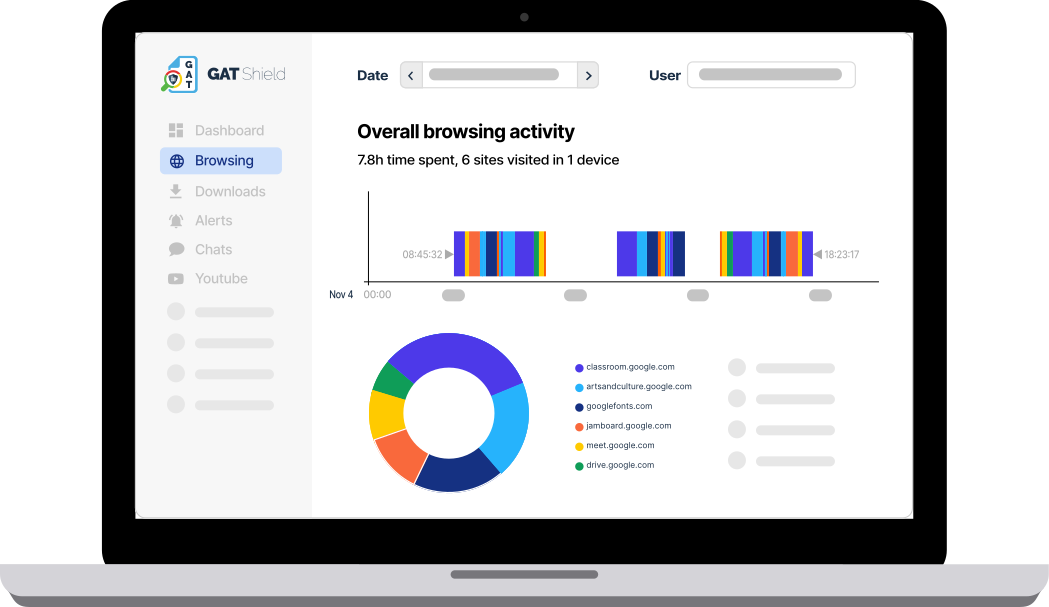
- – GAT+ provides deep visibility across Gmail, Drive, and connected apps so admins can identify affected users and risky behavior from one console.
- – GAT Flow automates lifecycle actions such as offboarding and ownership transfer, reducing exposure before incidents occur.
- – GAT Unlock enforcesMulti-Party Approval for sensitive actions, ensuring remediation steps are approved and logged.
Together, these capabilities reduce remediation time, limit exposure, and lower financial impact.
Key Takeaways for Admins
Security efficiency is not just about stopping a breach. It is about controlling the financial and operational variables you can influence before and after an event occurs.
Containment speed directly drives incident cost because every hour a threat remains active increases financial impact. Bulk remediation shortens containment time and provides the most effective way to protect your budget.
Manual remediation is often a hidden liability for the enterprise. Relying on one-by-one account updates creates a window of opportunity for attackers and forces your most expensive IT talent to perform repetitive tasks instead of high-value security work. Automation acts as a force multiplier here. Using automated workflows allows a small team to manage large-scale domain threats with the same precision as a much larger department.
Finally, lifecycle management serves as your proactive defense. A smaller attack surface naturally results in a smaller investigation. By automating the removal of inactive users and external shares, you ensure there are fewer entry points for a breach to exploit in the first place
Common Questions on Workspace Security Costs
1. How does automation reduce breach costs?
Automation reduces the number of manual steps needed to remove malicious emails, revoke access, and clean up exposure. This lowers labor hours and shortens containment time.
2. Why does lifecycle management matter for incident response?
Lifecycle management reduces the number of active accounts and exposed files. This limits how far an incident can spread and reduces remediation workload.
3. Can automated tools work alongside the Google Admin console?
Yes. Automated governance tools extend native visibility and workflows while still operating within the Google Workspace environment.
Insights That Matter. In Your Inbox.
Join our newsletter for practical tips on managing, securing, and getting the most out of Google Workspace, designed with Admins and IT teams in mind.