

Actions Available when Modifying Users #
Flow is a User Management tool for Google Workspace domains.
There are 3 types of workflows: Onboard, Modify, and Offboard existing users
For Modifying users, the Admin has a lot of options available. Below are examples available for “Modifying workflow”.
Navigate to GAT Flow. In GAT+ on the left side menu click on GAT+ icon and select Flow
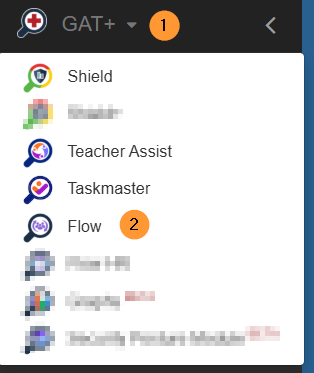
Create a modifying workflow #
Define Workflow Type #
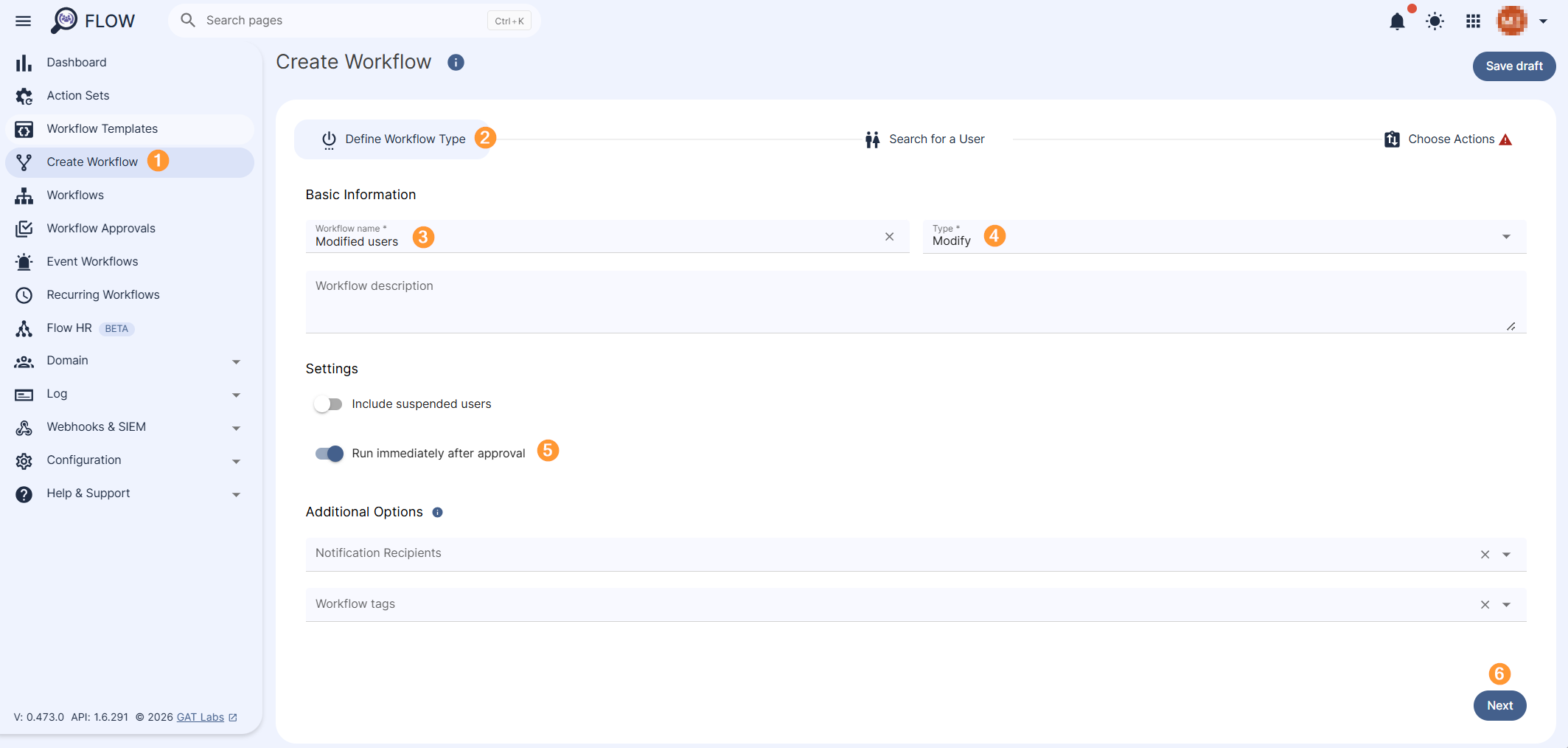
From the menu on the left, click on Create workflow.
The workflow window will be displayed. Under the ” Define Workflow Type section, enter the workflow Basic Information as follows:
- Workflow name – enter a name for the workflow
- Workflow description (optional)- enter a description of the workflow
- Type – select the workflow type
- Modify – Modify users
- Run immediately after approval (selected by default) – pick up a date when the workflow is to run, if applicable. More details here
- Next – click on the button to proceed
Search for a User #
Search for a User – select the users to be added to the workflow. Under the Add user section, there are the following options to use:
Select user by:
- User – Search and select individual user(s)
- Group – Search and select a Group of users
- Org. unit – Search and select Org. Unit of users
- Classroom – Search and select Classroom
- Import users – add users through import
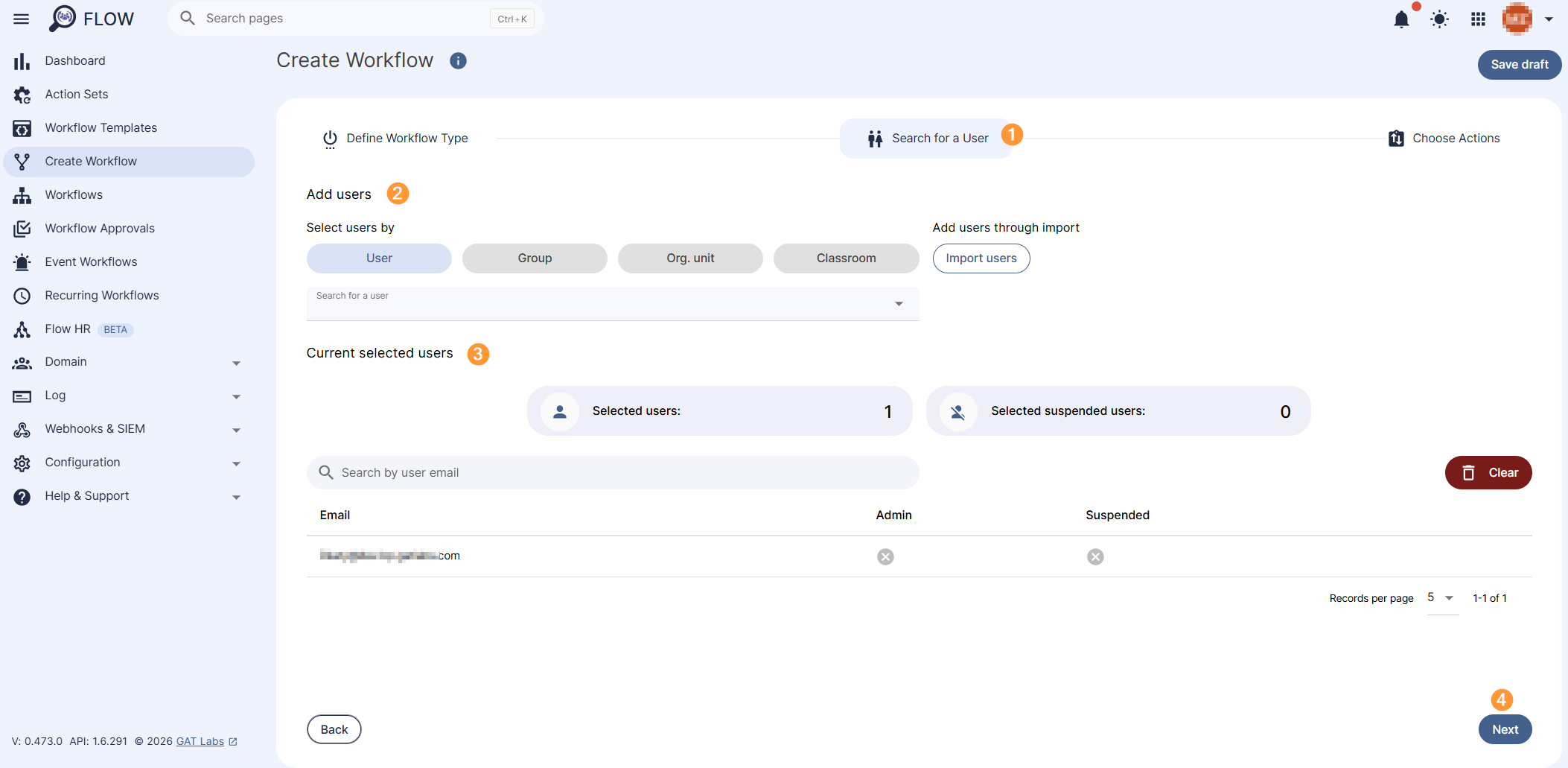
When the users are added, click on Next.
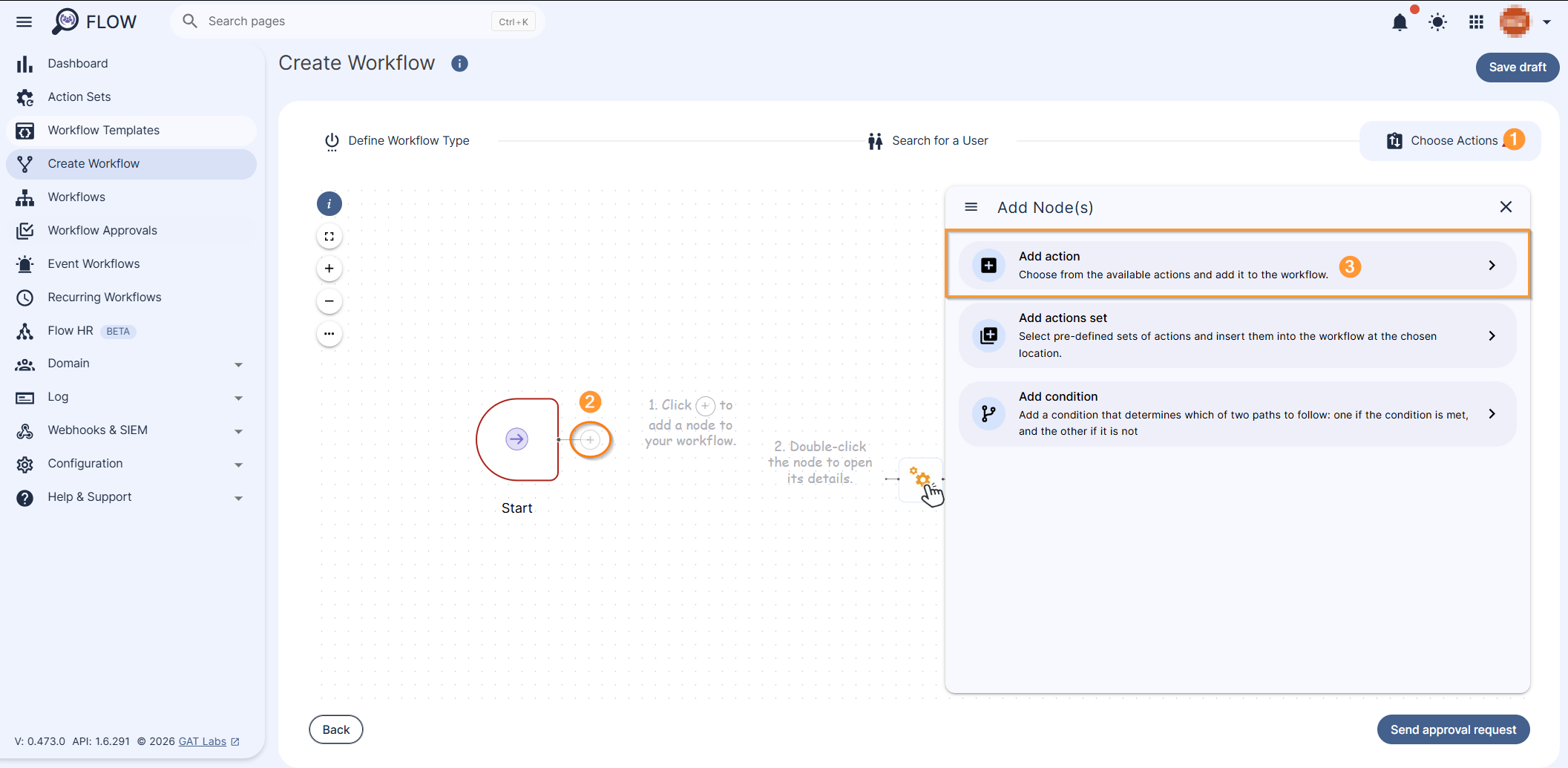
Choose Actions #
Choose Actions – set up the workflow actions by clicking on the “+” button on the left side of the workflow diagram to add an action
All the options available for the Modify type of workflow will be displayed.
All available actions will be displayed, which can be searched (1) and categorized (2) for faster searching. You can also scroll down the list of actions (3).
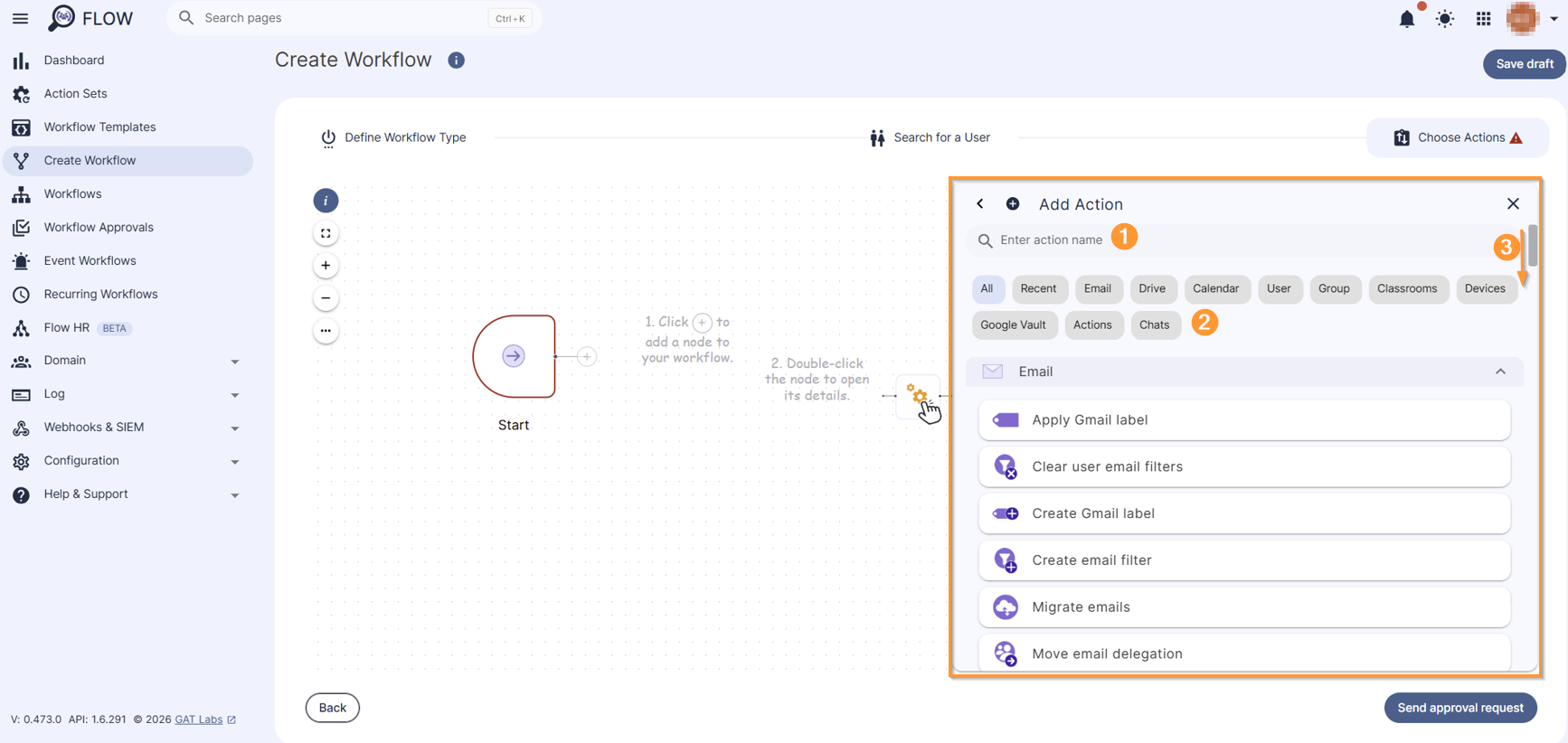
List of Modify actions #
List of actions available for Modify workflow:
- Email – actions for Google Email
- Apply Gmail label
- Clear user email filters
- Create a Gmail label
- Create a Gmail filter
- Migrate emails
- Move email delegation
- Remove Gmail labels
- Remove email delegation
- Remove all – remove all existing email delegations
- Delegates to remove – remove email delegation from a specific user’s accounts
- Remove email forwarding
- Send email
- Set IMAP
- Set POP
- Set email auto forwarding
- Set email delegation
- Set up “auto reply.”
- Drive – actions for Google Drive
- Copy folder to selected users
- Folder, Shared Drive permission change
- Calendar – actions for Google Calendar
- Add user to calendars
- Delete user calendar events
- Remove user from calendars
- Share user’s primary calendar
- Transfer calendar events
- Unshare user calendar
- User – actions for users
- Add user email Send as
- Add user email alias
- Archive user
- Change global directory visibility
- Change user email
- Change user organizational unit
- Change user password
- Change user password at next login
- Change the user’s employee information
- Clear recovery data
- Clear user aliases
- Clear user email Send as
- Copy user contacts
- Delete 2-step verification backup codes
- Delete app-specific passwords
- Delete user profile picture
- Disable 2-Step Verification
- Force sign out
- Google application data transfer
- Make YouTube videos unlisted
- Manage Flow user delegation
- Migrate Google Keep
- Remove suspended users from contacts
- Remove user access to files and folders
- Remove user from Google Sites
- Remove user from all calendars
- Remove user manager
- Remove user role
- Revoke apps tokens
- Set “address me as”
- Set as super admin
- Set email signature
- Set recovery email
- Set recovery phone
- Set time zone
- Set user custom attribute
- Set user manager
- Set user role
- Set the user’s preferred language
- Suspend or unsuspend the user
- Sync contacts
- Unarchive user
- Unshare owned files
- Unsuspend user
- Group – actions for groups
- Add user to groups
- Change group member subscription
- Delete user from groups
- Delete from all groups
- Delete from all groups with some exclusions (‘Don’t remove from’)
- Delete only from specific groups
- Classroom – actions for Google classrooms
- Add user(s) as a Co-teacher to the existing Google Classrooms
- Add user(s) as students to Google Classrooms
- Change Classrooms owner
- Create classroom
- Remove student(s) from Classrooms
- Remove teacher(s) from Classrooms
- Devices – actions for devices
- Change Chrome OS device status
- Change Google license assignment
- Wipe devices
- Wipe mobile devices – Choose the action that will be done on the user’s mobile devices:
- Delete – Removes a mobile device.
- Block – Blocks access to G Suite data (mail, calendar, and contacts) on the device. The user can still access their mail, calendar, and contacts from a desktop computer or mobile browser.
- Remote wipe – Remotely wipes all data on the device. See the administration help center for more information.
- Wipe account – Remotely wipes only G Suite data from the device. See the administration help center for more information.
- Google Vault – actions for Google Vault
- Create Google Vault export
- Remove user from hold
- Set Google Vault hold
- Actions – actions for workflow
- Approve workflow – extra layer of security (second verification enforcement); it will work even if pre-approval is already configured for the workflow requester.
- Broadcast flow event – an action that allows workflows to connect
- Delay workflow – delay actions for the workflow to run the way an Admin arranges it, timewise; this option is to be used when the jobs set don’t have to or shouldn’t run at the same time
- Send webhook call
- Chats – actions for Google Chat Spaces
Send approval request – click when any of the actions are selected, and the details are filled in.
A pop-up window will be displayed where it can be confirmed to proceed with the request.
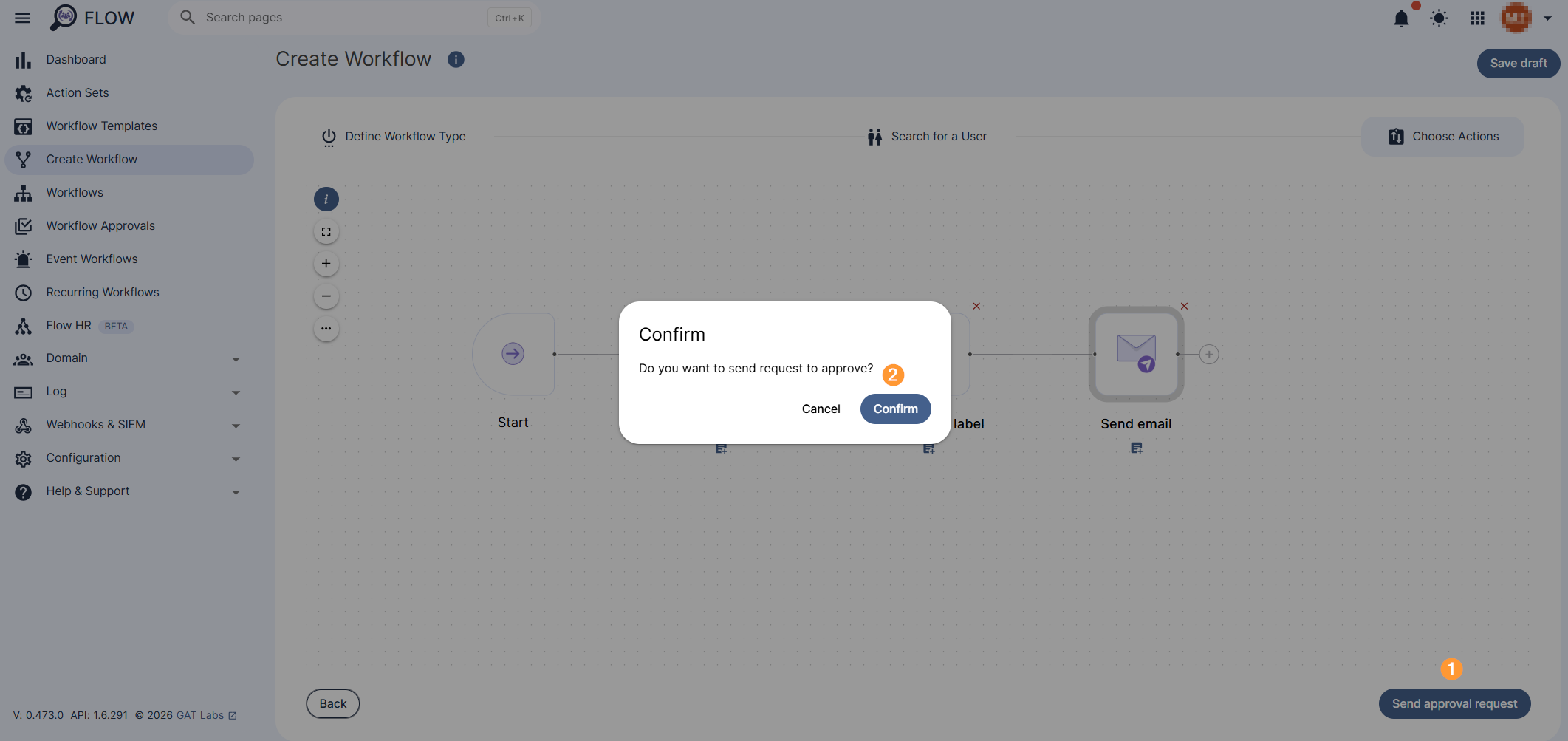
The request will be sent to the Security officer for approval.
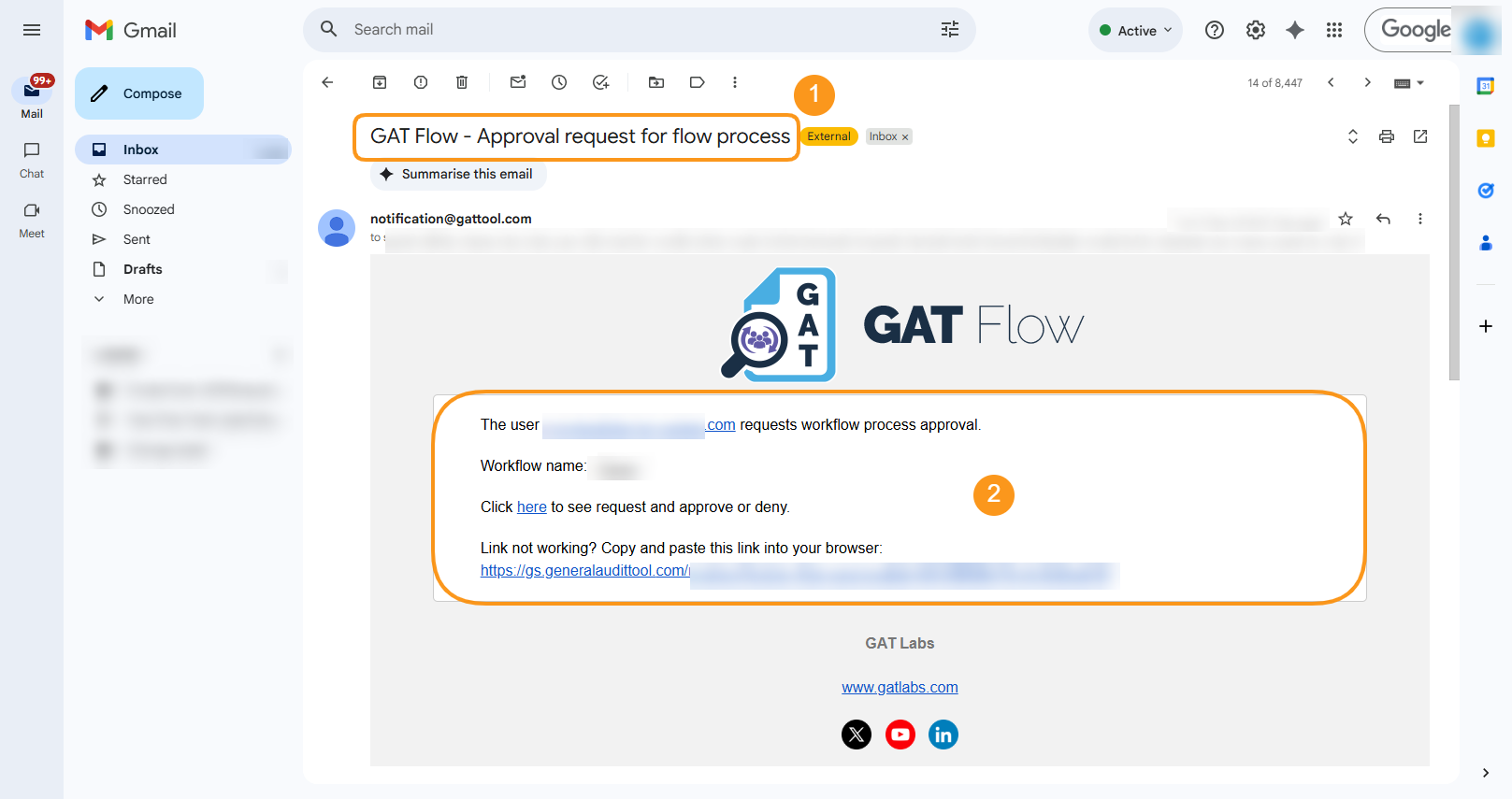
The Security Officer can review and approve or deny the workflow.
From the menu on the left, click the Workflow tab to see details.
Result #
Workflows – click to view details of the Modify workflow
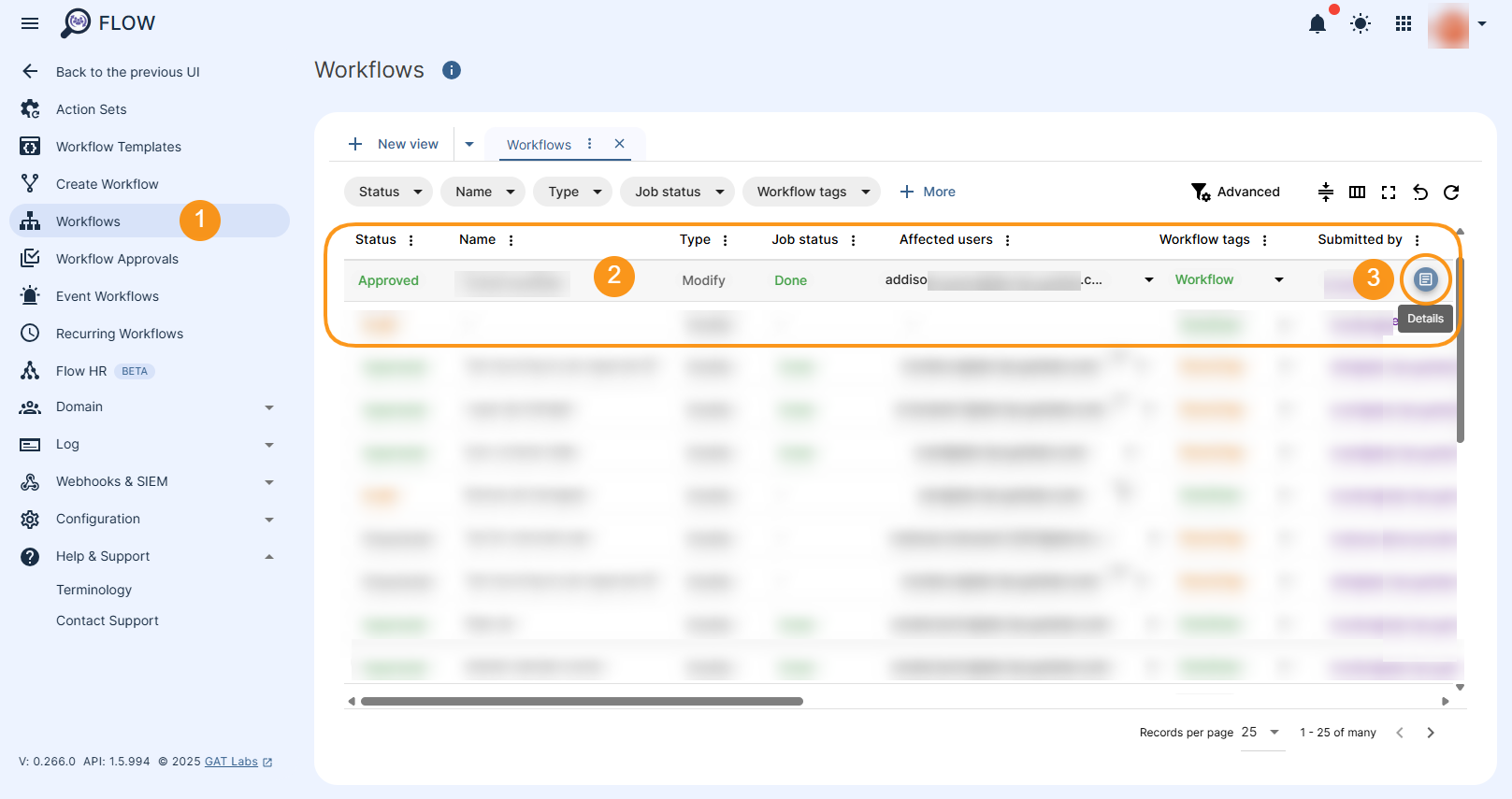
The Status of the request can be as follows:
- Requested – send to the Security officer for approval
- Approved – the Security Officer has approved the request
- Job status – will show the status of the current workflow job
- Scheduled – when is set to run
- Done – when the workflow has been completed
- Partially done – when completed partially
- Eye icon – click on the eye icon to view more details
- Details icon – the icon on the right side of the workflow will show all details for the Flow request
- Save as action set – save the Workflow as an action set for easy later use
- Edit – edit the workflow and apply changes


