

GAT Flow’s Dynamic Groups #
As a Google Workspace administrator, efficiently managing group memberships in a dynamic organizational environment is crucial.
Dynamic Groups in GAT Flow offers an automated solution, adapting to changes based on criteria you set and ensuring up-to-date group memberships.
Flow dynamic groups are the equivalent of dynamic groups from Google, updating a minimum of once a day. Dynamic Groups in Flow would run regardless of the Google Workspace license that you have.
This is particularly helpful for organizations with multiple locations or frequent team changes.
Flow Dynamic groups can serve various purposes:
- Managing email and distribution lists
- Facilitating moderated groups and Collaborative Inboxes
- Enforcing security group functionalities
In the Google Admin console, this feature is available in editions like Frontline Standard, Enterprise Standard and Enterprise Plus, Education Standard and Education Plus, Enterprise Essentials Plus, and Cloud Identity Premium.
Flow Dynamic groups – act the same as a normal Dynamic group from Google, with the difference that the Flow Dynamic groups management is available regardless of your Google plan.
Simple Steps to Create Dynamic Groups in GAT Flow #
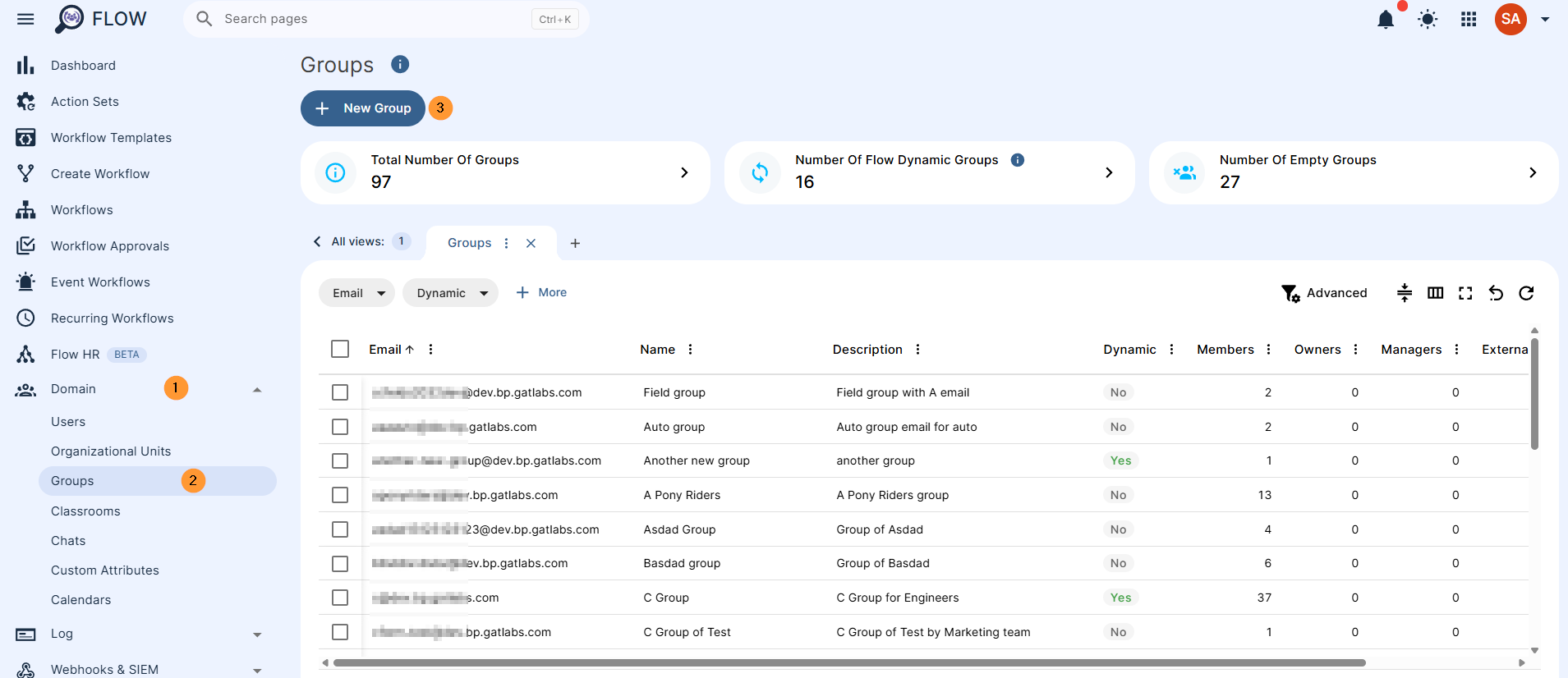
Navigate to GAT Flow > Domain (1) > Groups (2) > (+) New group (3)
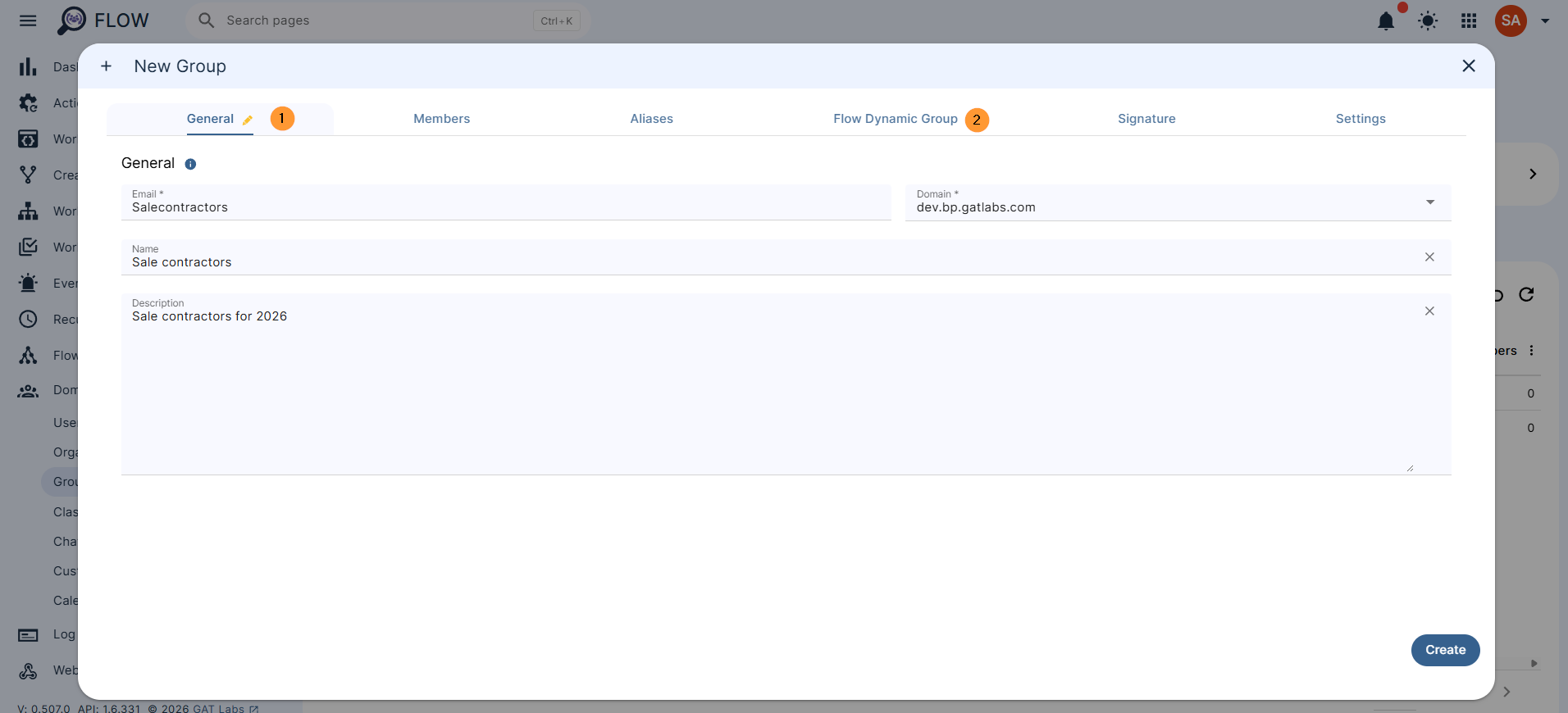
Fill in the required details for the new group
- General (1) – fill in the general info for the group
- Enter the email and domain for the group
- Name – enter a name for the group
- Description – enter a description for the group
Conditions builder #
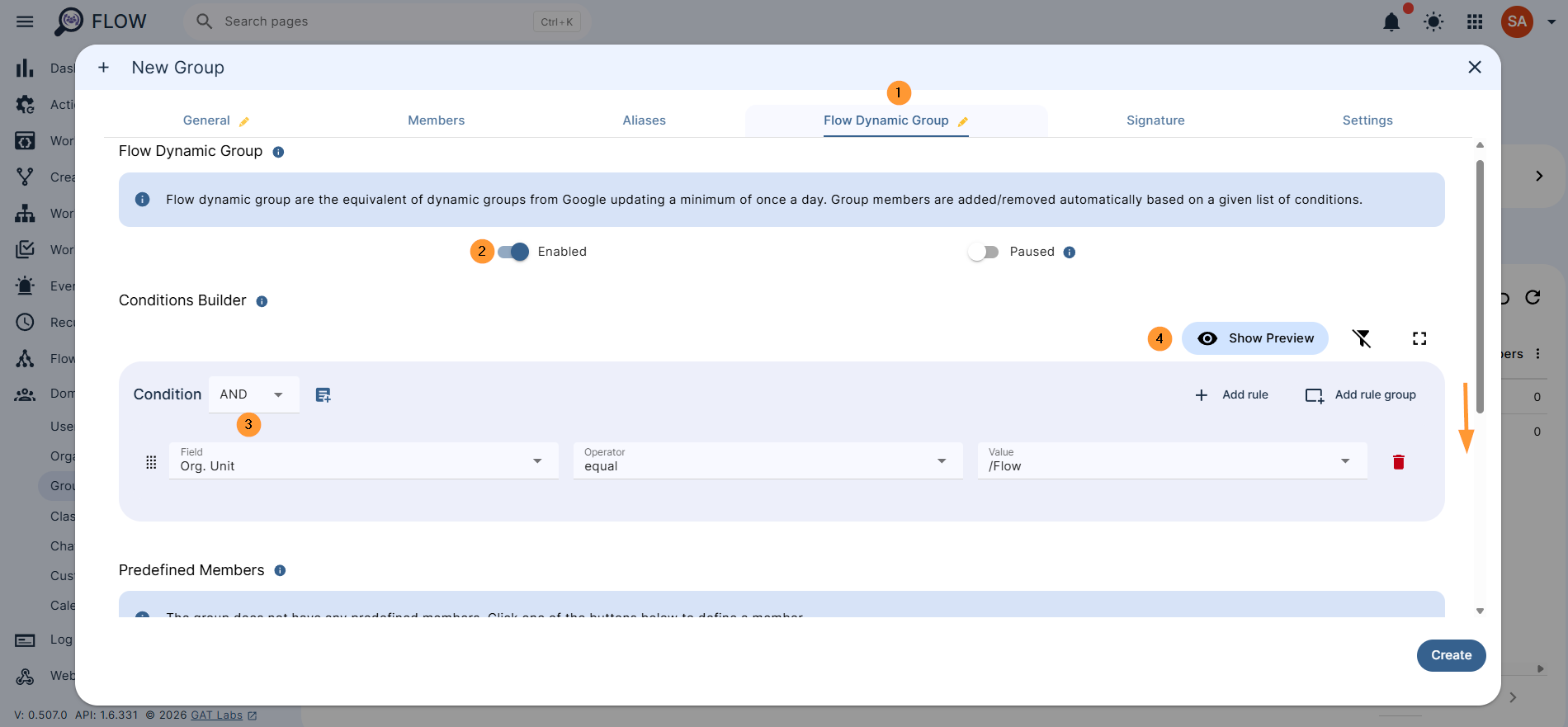
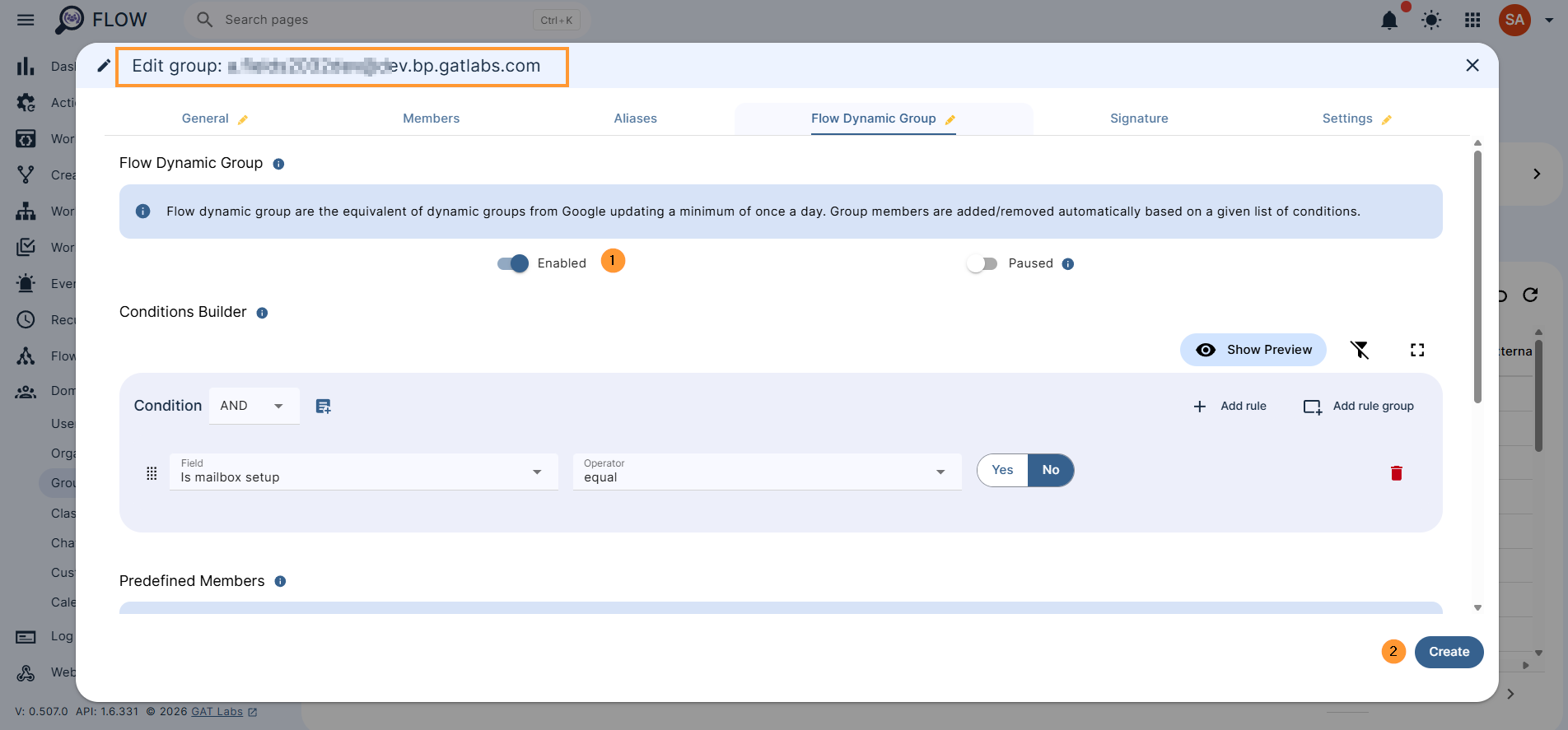
- Flow dynamic group (1) – click to navigate to Flow dynamic group and enable
NOTE: Flow dynamic groups update a minimum of once a day.
The system automatically adds or removes group members based on a given list of conditions.
-
- Display a new window and select the condition for the Flow dynamic group.
- Select any condition to trigger the automatic member management of the group
- Predefined conditions are as follows, and more
- Primary email
- Org. Unit
- Is suspended
- Is archived
- Is admin
- Is manager
- Is 2FA enabled
- Is 2FA enforced
- Is the mailbox set up
- Relation – Type
- Relatino – Value
- Org. – Job title
- Org. – Department
- Org. – Employee type
- Org. – Cost center
- Org. – Name
- Org. – Is primary
- Phones – Type
- Phone – Value
- External ID – Type
- External ID – Value
- Location – Building ID
- Location – Area
- Location – Type
- Location – Floor name
- Location – Floor section
- First name
- Last name
- Full name
- Custom attributes
- Any “custom attributes” that are added to the domain
- Predefined conditions are as follows, and more
- You can add a Rule and/or add an inner group
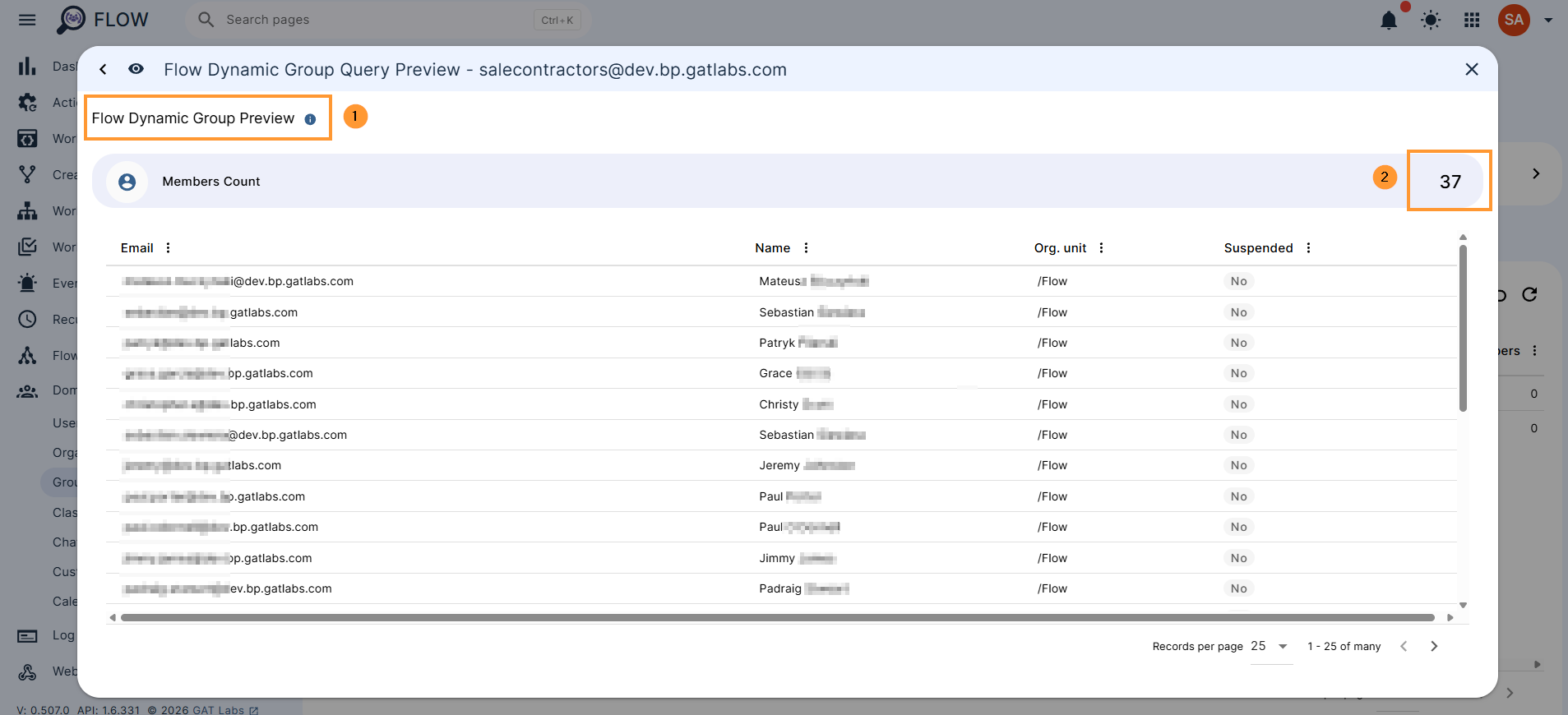
- The show preview button allows you to view the users’ accounts that meet the criteria set up and that will be added as members of this Dynamic Group
- “!” (exclamation mark) – allows adding the description of the group condition
NOTE: The “Show preview” (4) option also provides the number of members that will be added to the Dynamic Group after it is created based on previously defined conditions.
The list will show all users that will be added to the group, based on the condition selected
Predefined members #
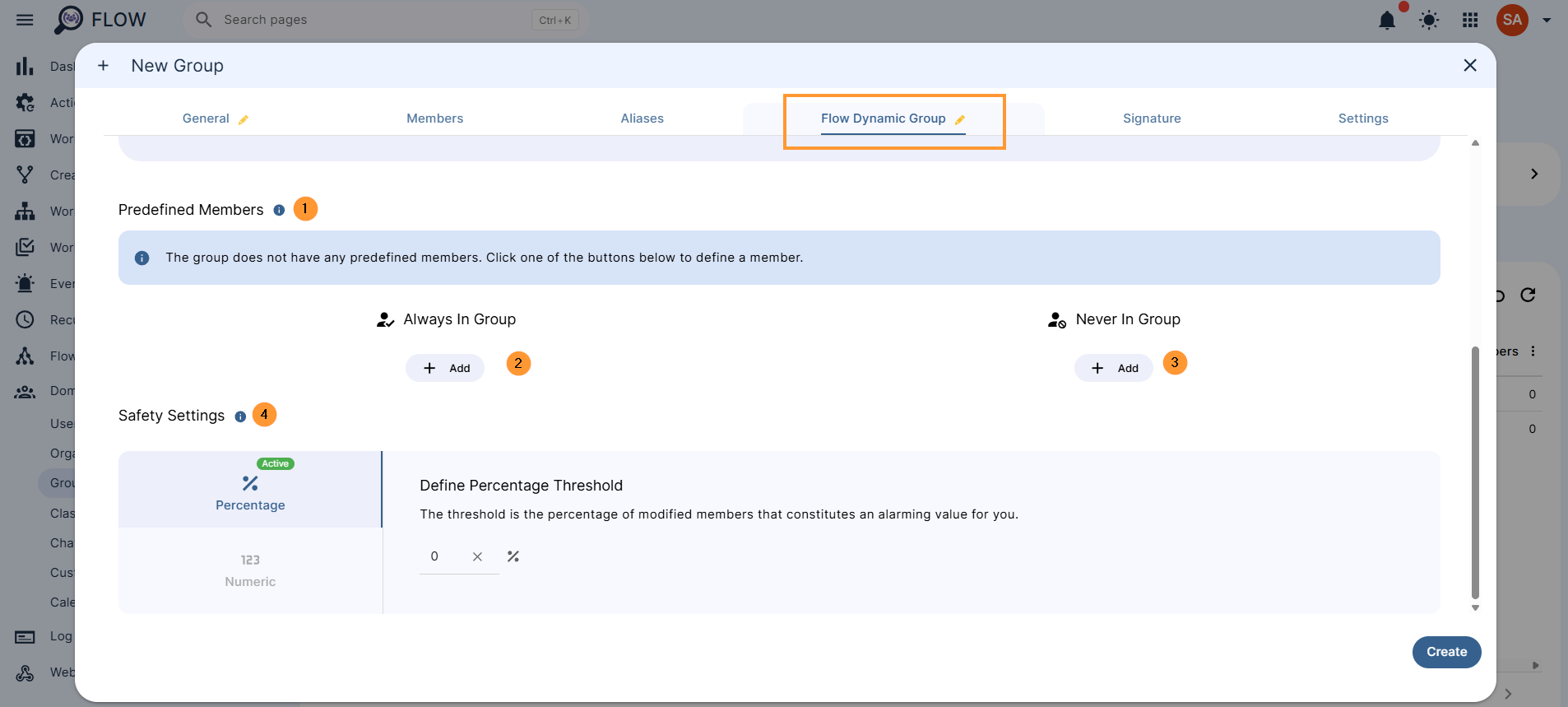
Example for Safety settings #
Let’s assume the group has 300 users. If the automation attempts to add/remove 151 users, the group processing will be paused.
Additional settings to create a group #
The Admin can add:
- Aliases
- Members – but as this will be a dynamic group, the group will be created as a Flow Dynamic Group. Members will be managed automatically and will appear when the group is saved
- Group signatures
- Settings for the group
Result of the Creation of Flow Dynamic Groups #
After setting the condition and predefined members, click on ‘Create’ to finalize the Dynamic groups.
Consequently, the Dynamic group will be created and become visible in the group audit in Flow.
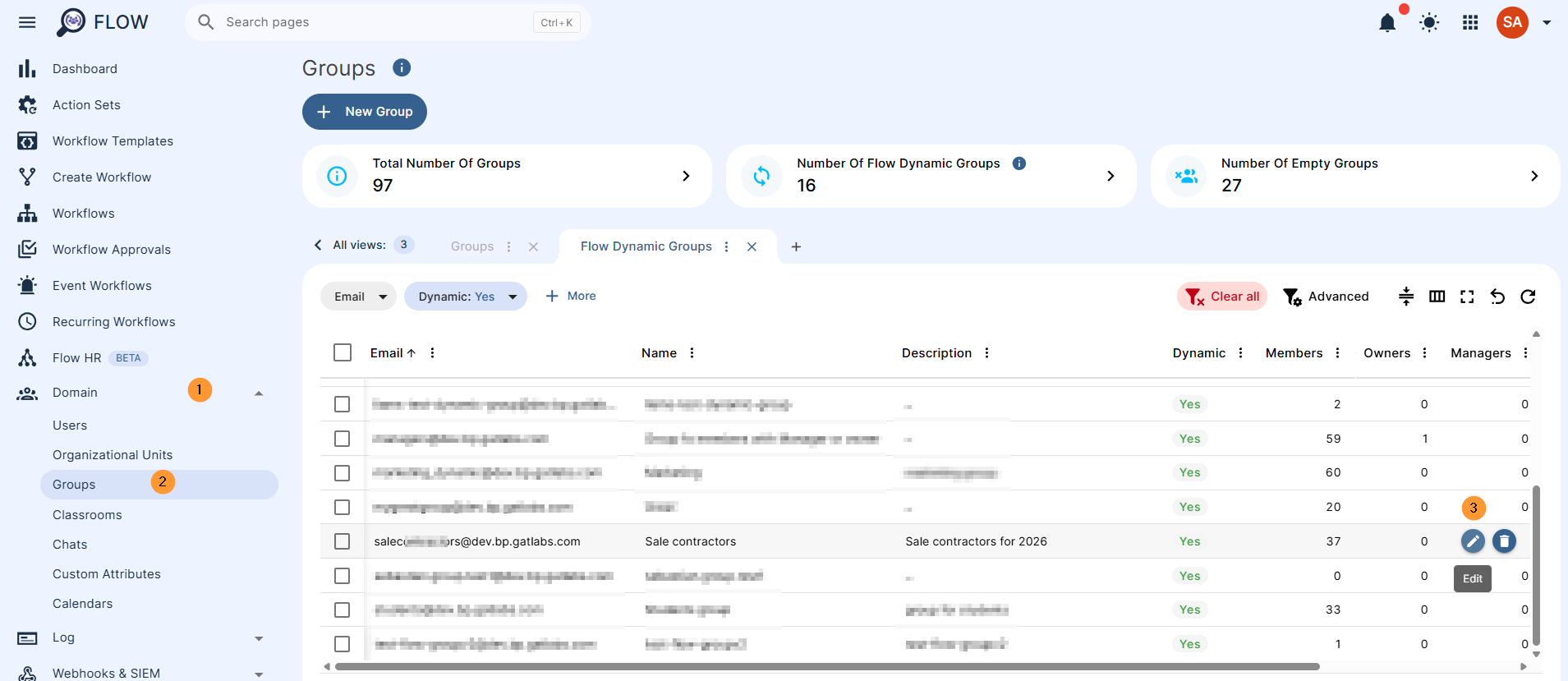
The system will fulfill the group condition and automatically add members.
In the Groups, click on the Pen icon and go inside the group details.
Scroll down to Members, and you will see all the members added based on the condition used above.
Convert the existing Google Group into a Flow-dynamic group #
To convert an existing Google Group into a Flow Dynamic Group, follow these steps:
Navigate to Domain > Groups > Edit group (pen icon) > Flow dynamic group
Click on Enabled – to enable, and in the pop-up window, convert to Flow dynamic group
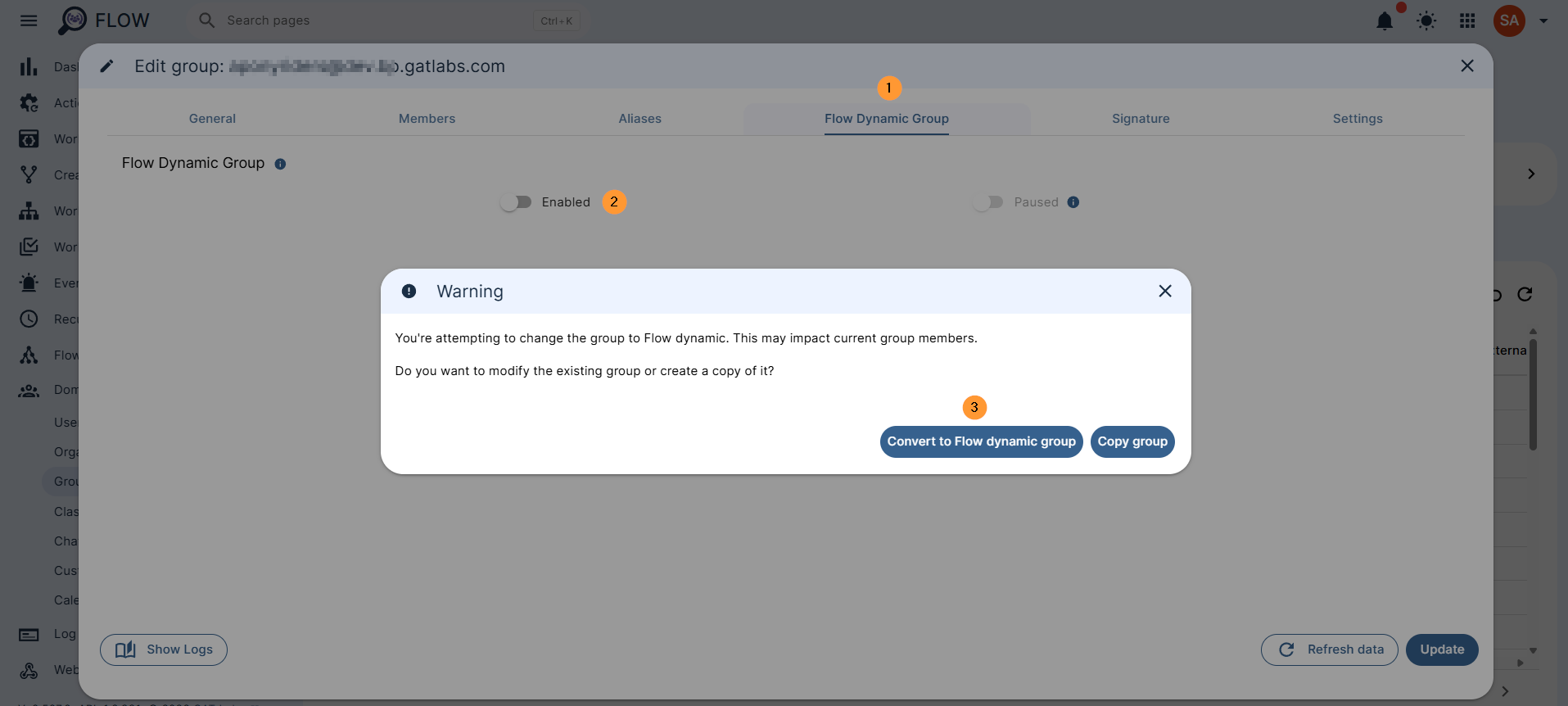
This will activate it, then you can choose the condition and proceed with the setup of the Dynamic group
Copy Group details to create a new Flow-dynamic group #
This will allow you to copy the group and re-create it as a new one. Note: This action will not affect the original Group.
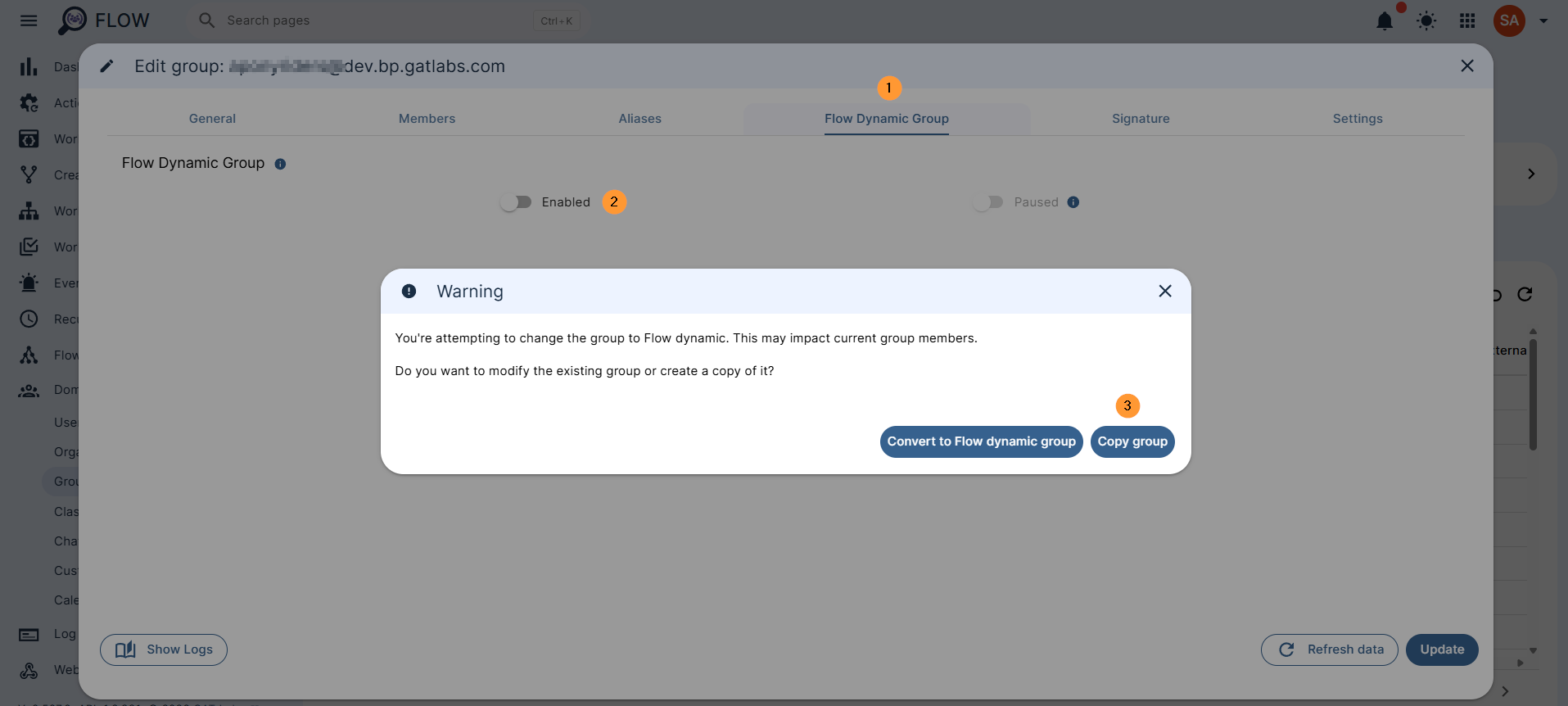
Subsequently, it will open a new ‘edit group’ window. Here, you can replace/edit the group email and all its details.
As a Google admin using GAT Flow, you can create dynamic groups that adjust automatically, simplifying the management of members in organizations with multiple locations or frequently changing teams.
These dynamic groups are useful for handling email lists, facilitating moderated groups, and ensuring security functionalities.
Conclusion for Dynamic groups #
- Fail-Safe Security and Scale Control: The inclusion of “Safety Settings” (percentage and numeric thresholds) acts as a critical insurance policy for admins. It prevents catastrophic, accidental mass exclusions or inclusions due to bulk HR updates by pausing the process and alerting the IT team before changes are committed.
- Agility in Volatile Environments: For organizations experiencing rapid scaling, high turnover, or complex restructuring across multiple physical sites, this feature ensures that distribution lists, Collaborative Inboxes, and security groups remain perfectly accurate with zero latency.
- Flawless Migration & Backward Compatibility: Admins aren’t forced to build from scratch. The ability to seamlessly convert existing static Google Groups into dynamic ones, or clone group configurations without affecting live production environments, ensures risk-free deployment and immediate optimization.


