

We are excited to announce our newest addition to GAT Flow – The ‘Groups‘ Module!
This powerful new feature allows Google Workspace Admins to apply multiple changes for their Google Groups.
This is possible via the Groups audit section in Flow
Audit Groups #
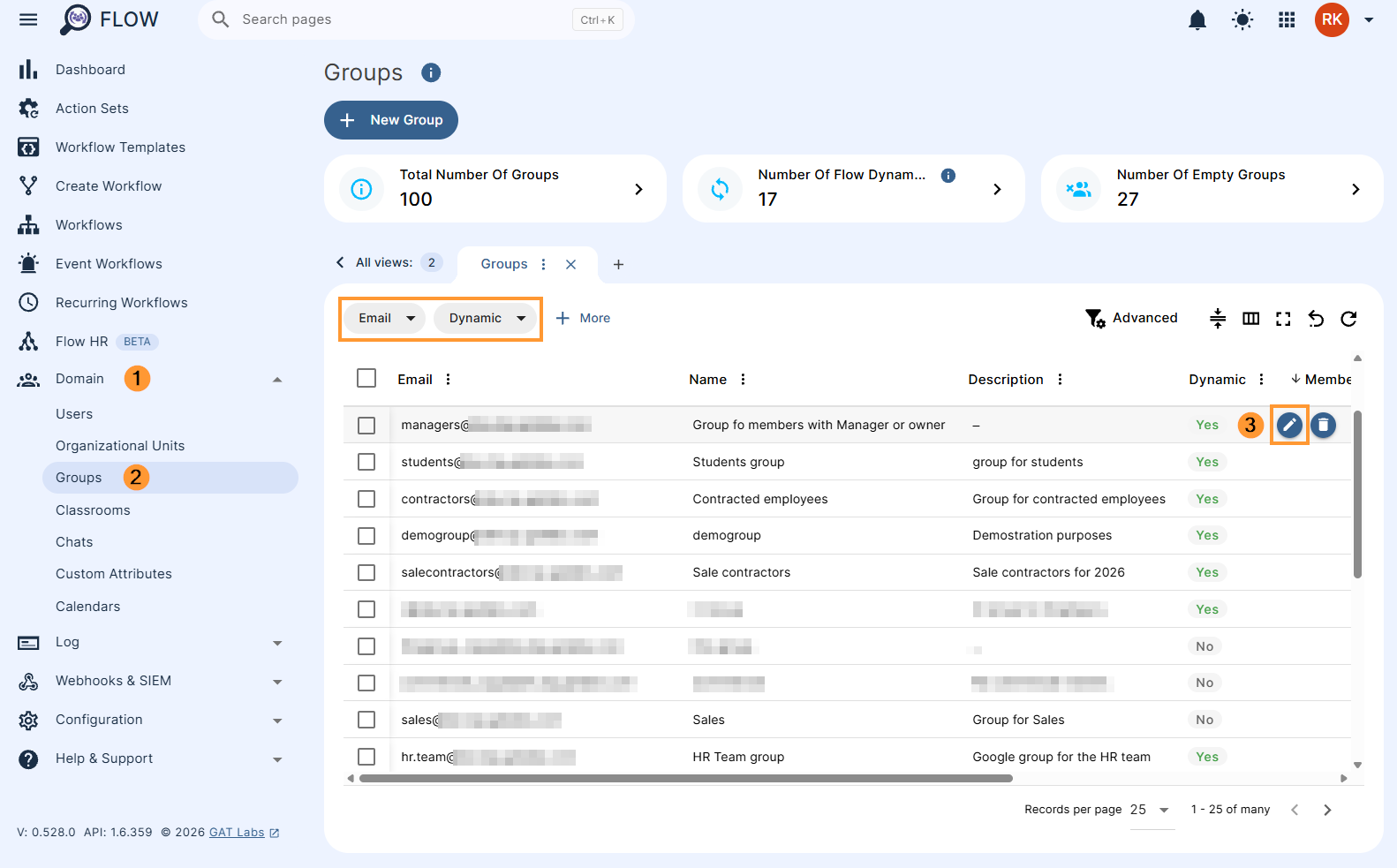
Launch GAT Flow and navigate to the ‘Groups‘ module.
All Google Groups will be displayed on the menu on the right side.
Select a Group from the list of Google Groups in the domain. You can also apply a filter (filter chips on the top left of the results table) to search for the Group you want to configure.
Group Configuration #
Select the pen icon next to the group you want to configure.
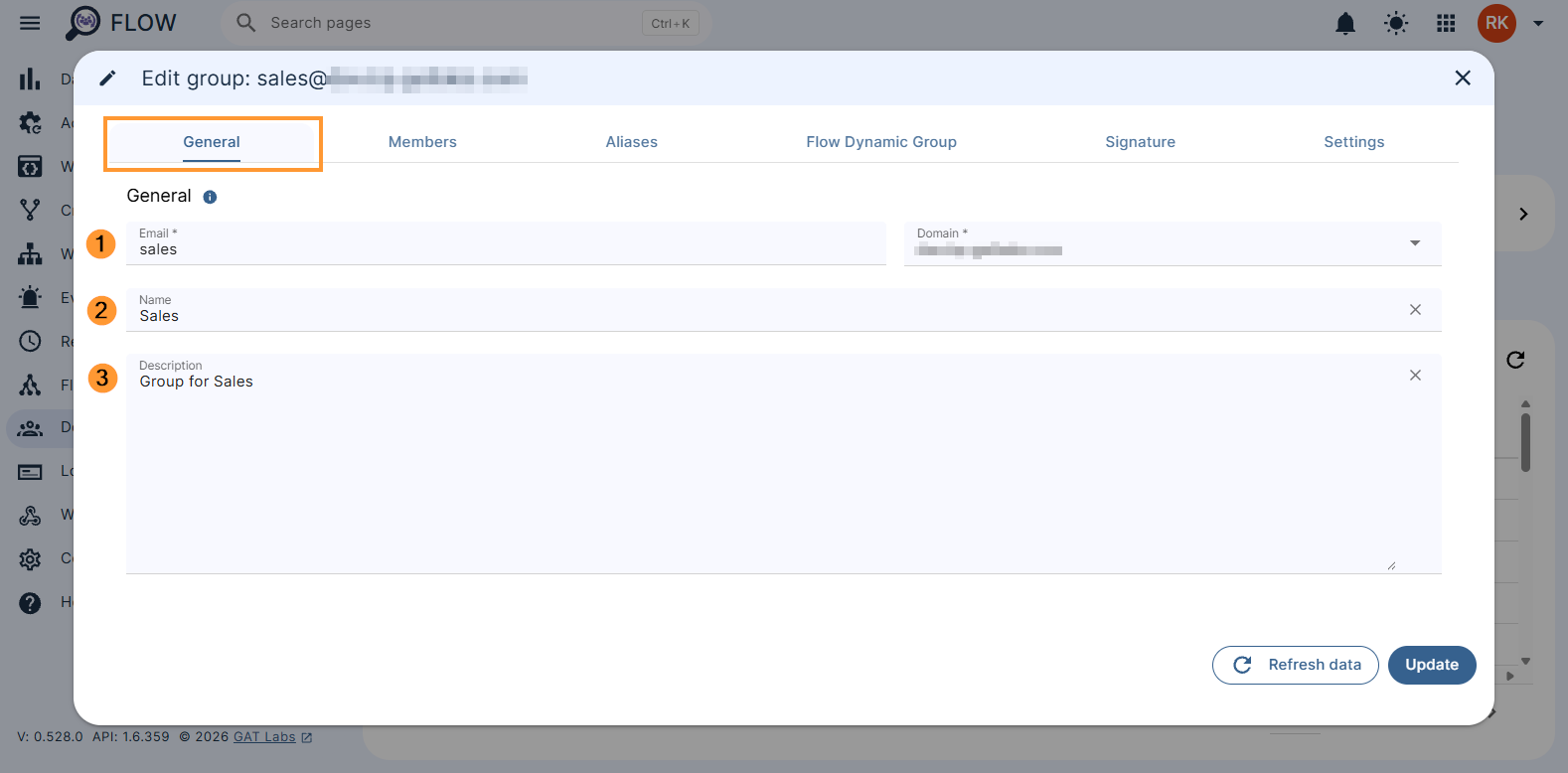
Now the tool will take you to the Edit group window.
In the Edit group window, you can select at will what information you want to edit. This is divided into a few different sections.
General tab #
The General section will allow you to update:
- Email – change the email of the group
- Name – change the name of the group
- Description – change the description of the group
Members tab #
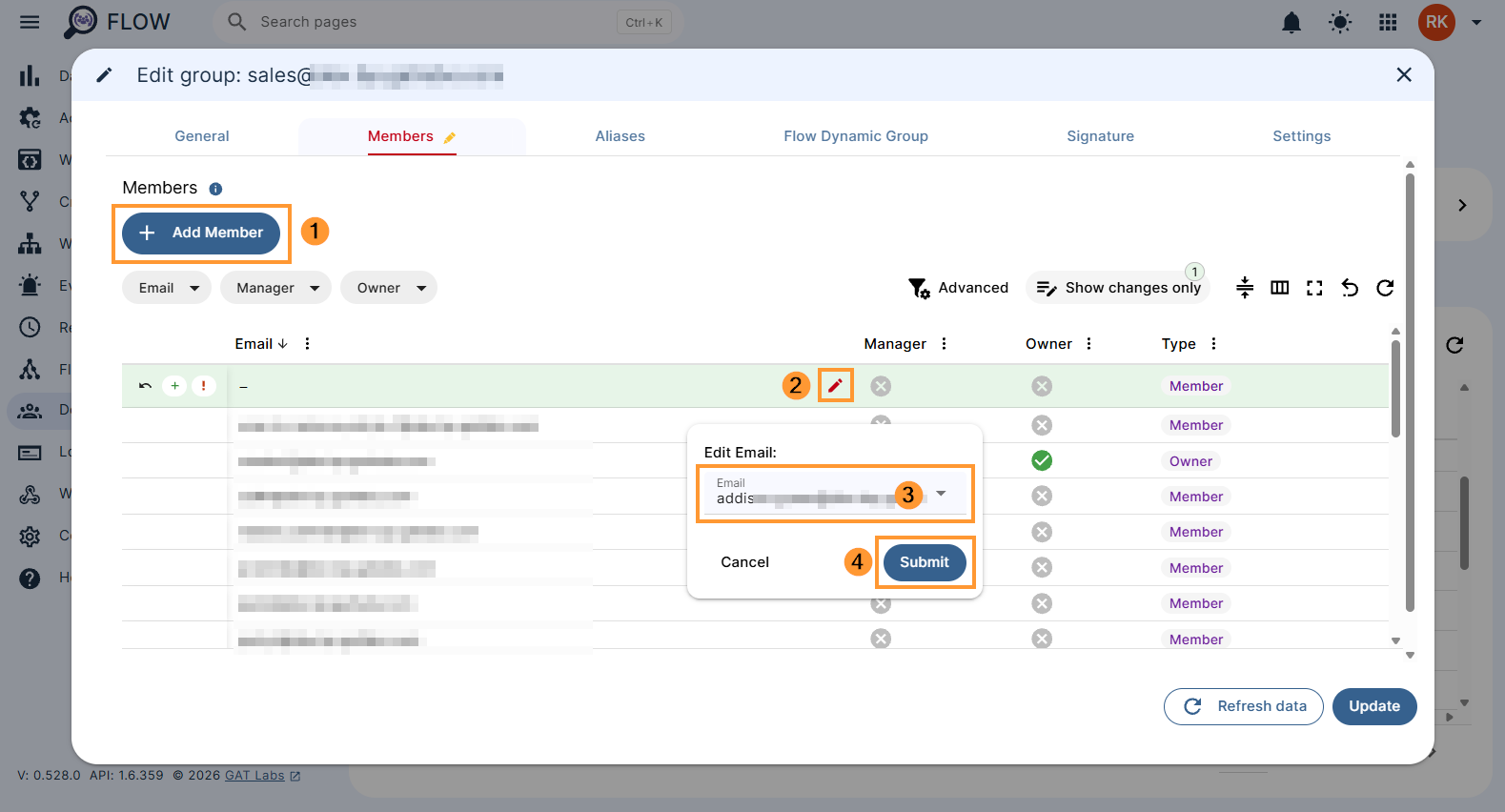
Groups member configuration where you can view Group member, a role for the user in the group, and state if is changing or not.
Add member #
Click on the “Add Member” button this will allow you to add a new member to the selected group
In the pop-up window enter
- Member email – search and enter the email (user needed)
- Member role – enter the role for the new member
- Member – add a user to be a member of the group
- Owner – add a user to be the owner of the group
- Manager – add a user to be a manager of the group
Edit member #
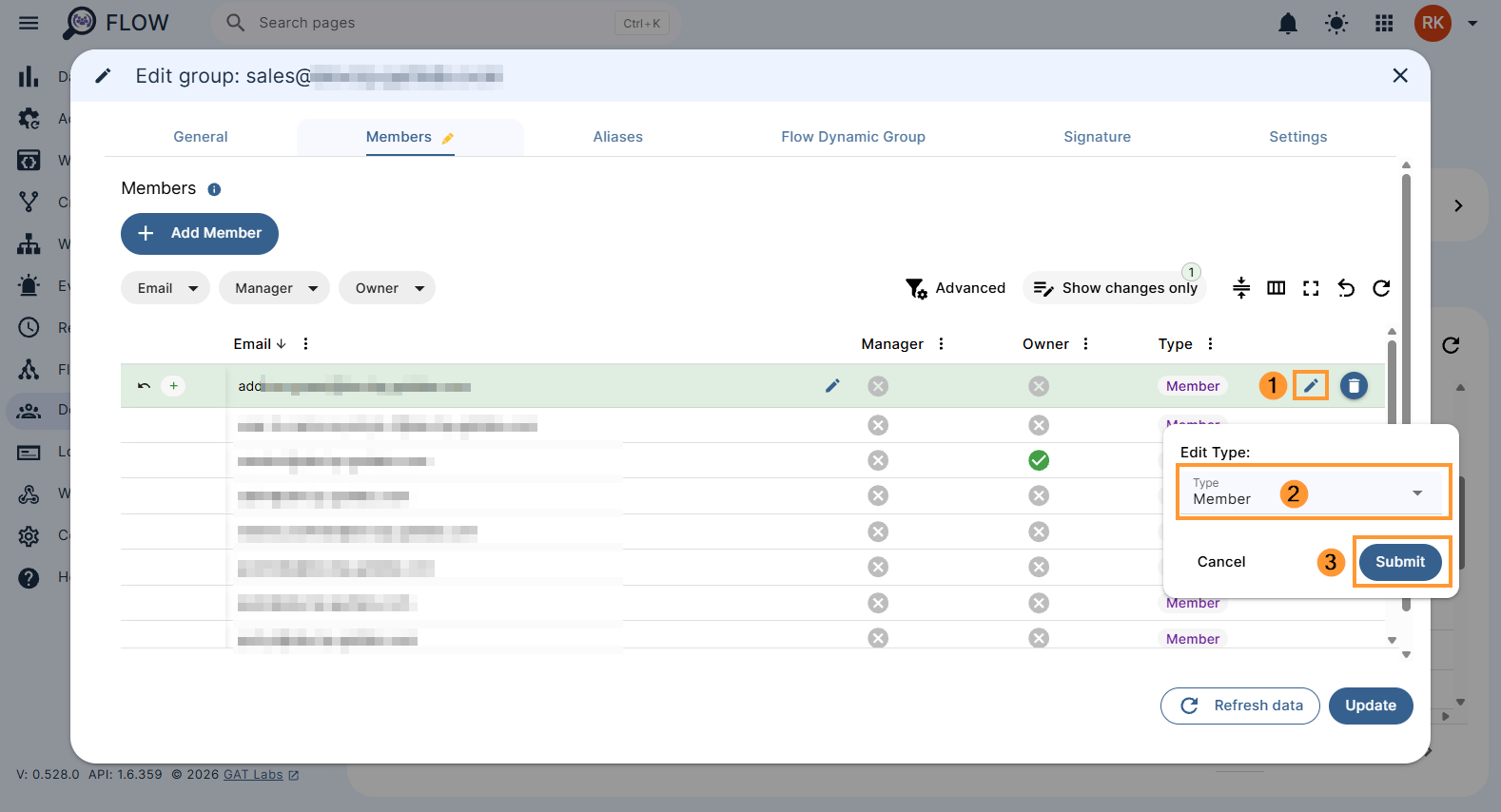
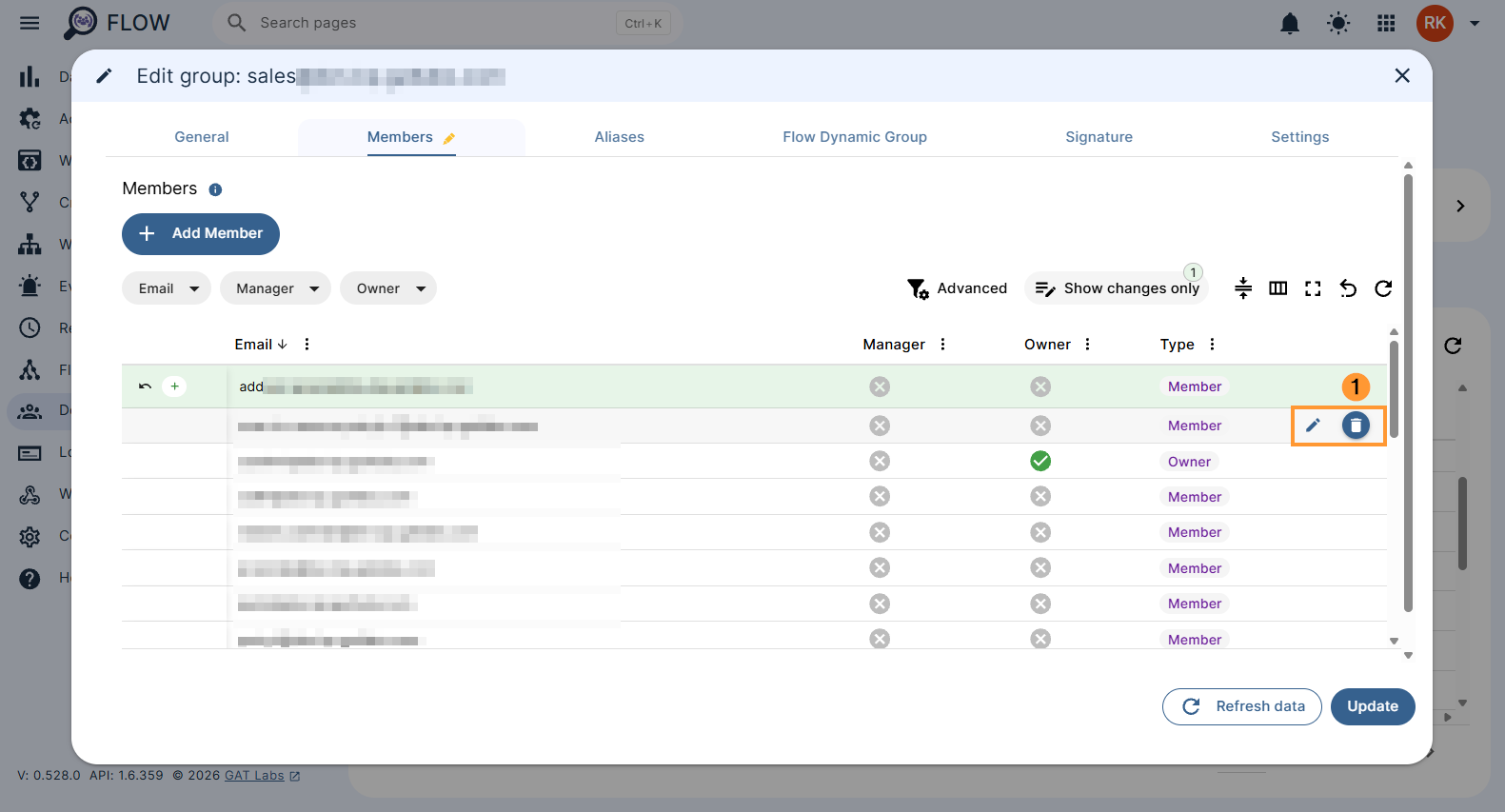
Selecting the pen icon will allow you to edit the member, select a different role and click on the “Submit” button.
Delete member #
Selecting the trash icon will delete the member.
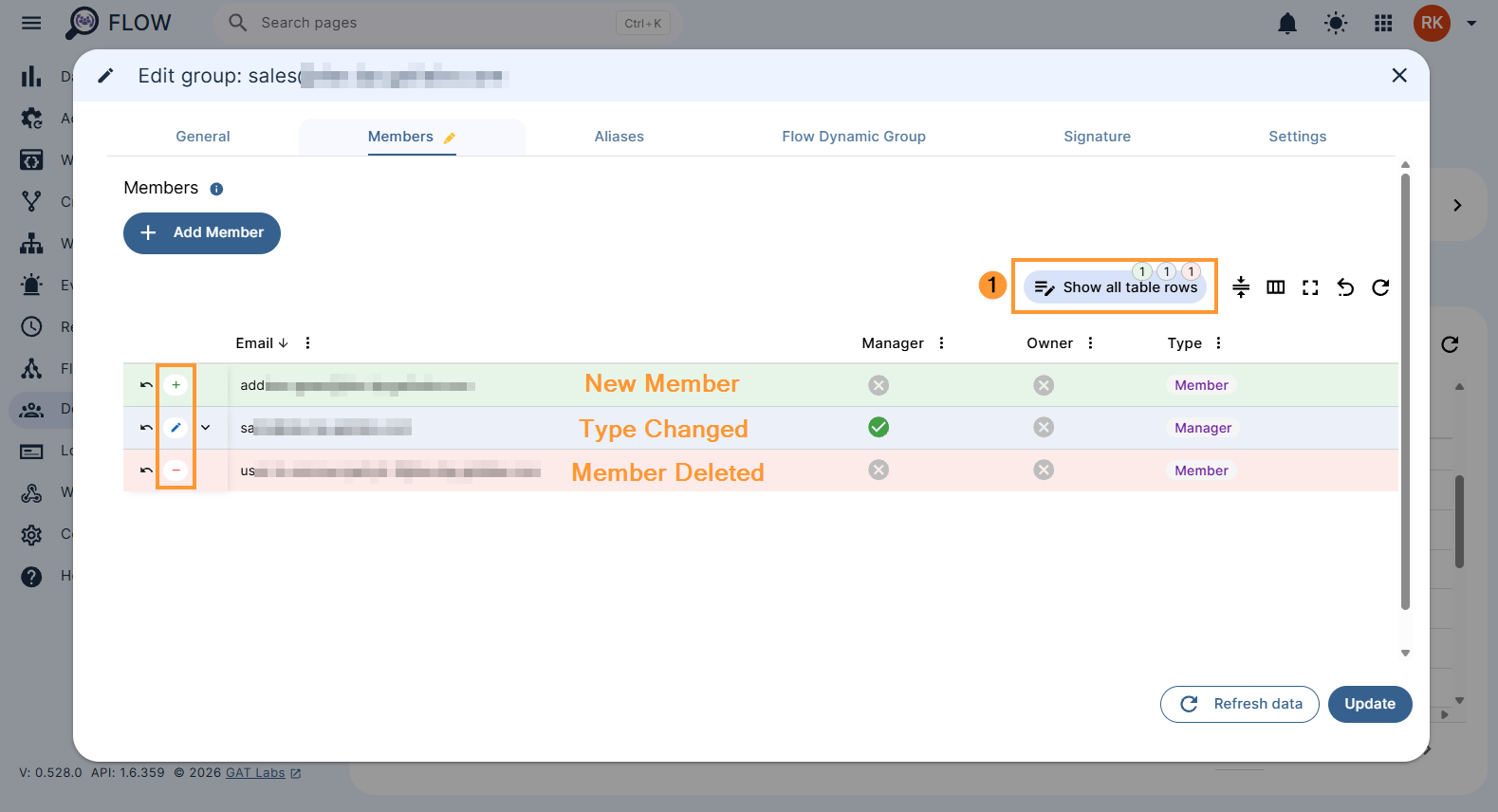
Any change that is applied will be shown above under the ‘Show changes only’ section.
Show Changes Only #
- Green – This indicates a new member has been added.
- Blue – This indicates that the member’s type has been changed.
- Red – This indicates that the member has been removed from the group.
Aliases tab #
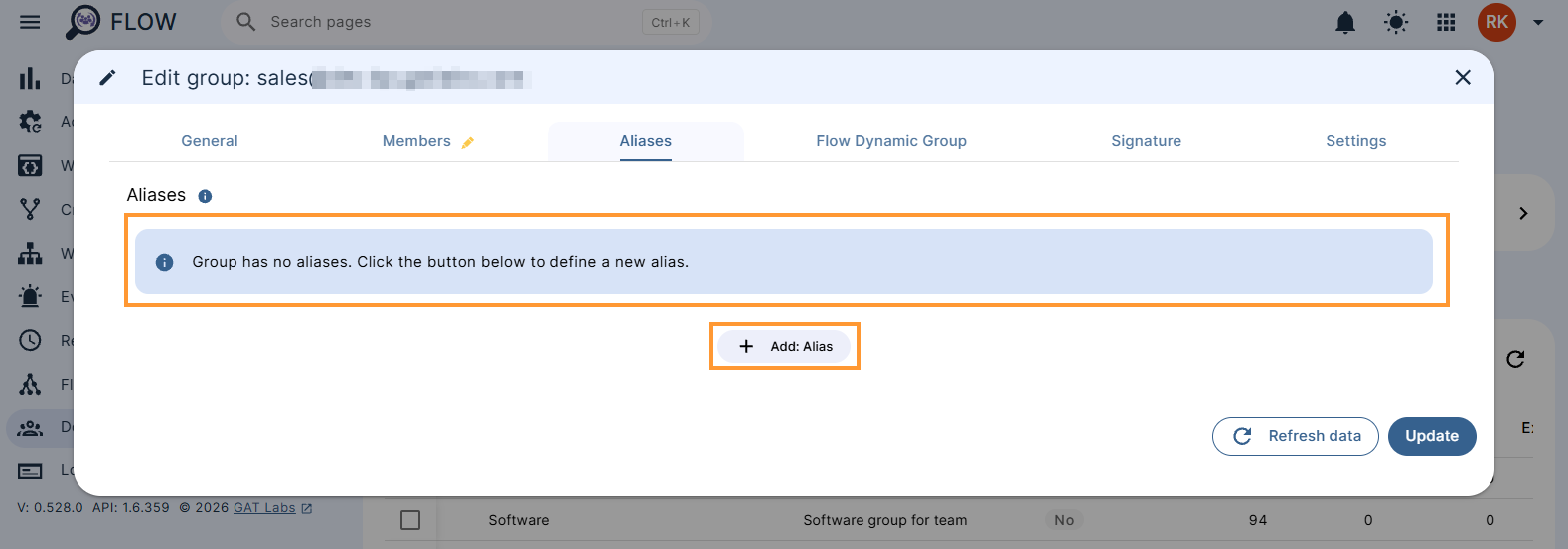
If no group aliases has been setup, you can add an alias by clicking the + Add: Alias button.
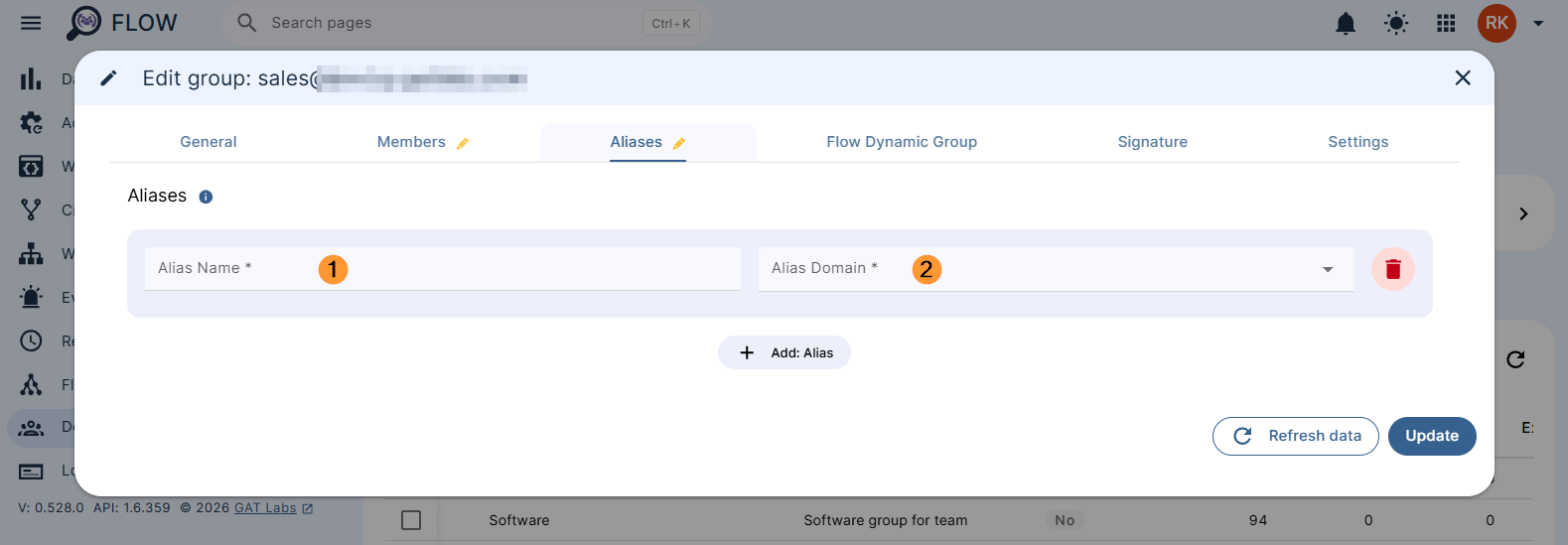
- Alias Name – enter the alias name for the chosen group.
- Alias Domain – enter the aliases domain you would like to use.
Flow dynamic group #
Flow dynamic group are the equivalent of dynamic groups from Google updating a minimum of once a day. Group members are added/removed automatically based on a given list of conditions.
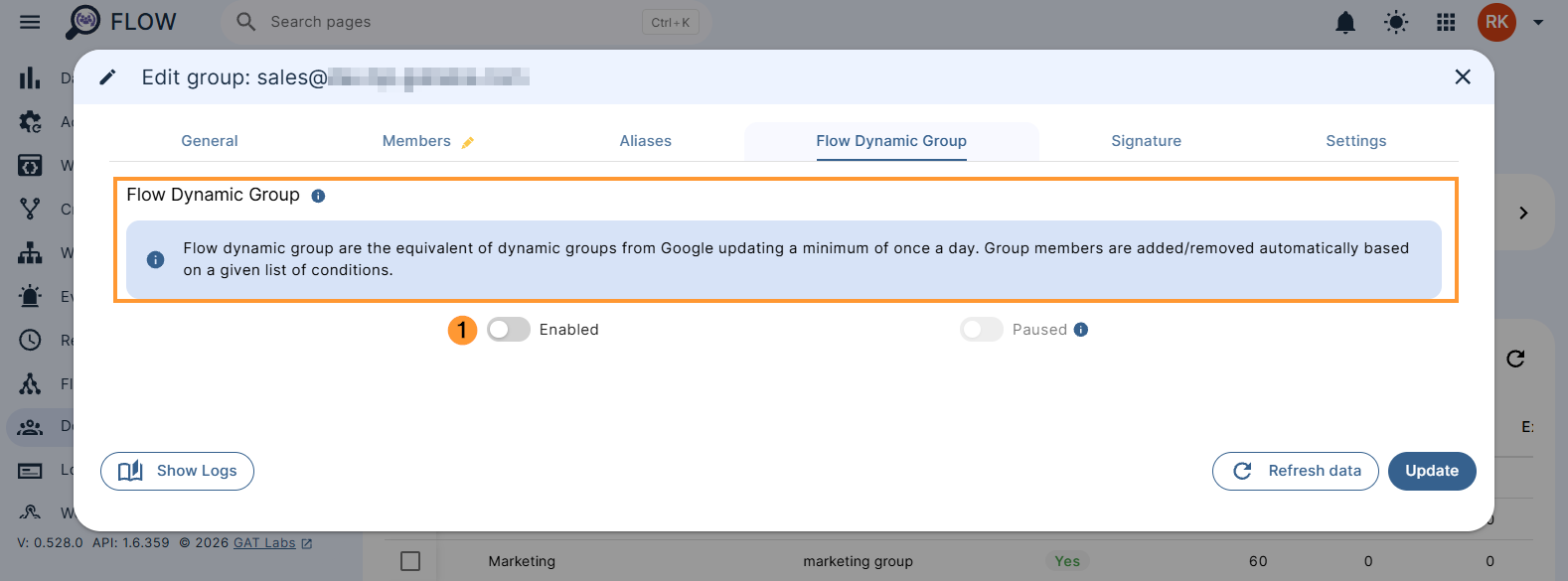
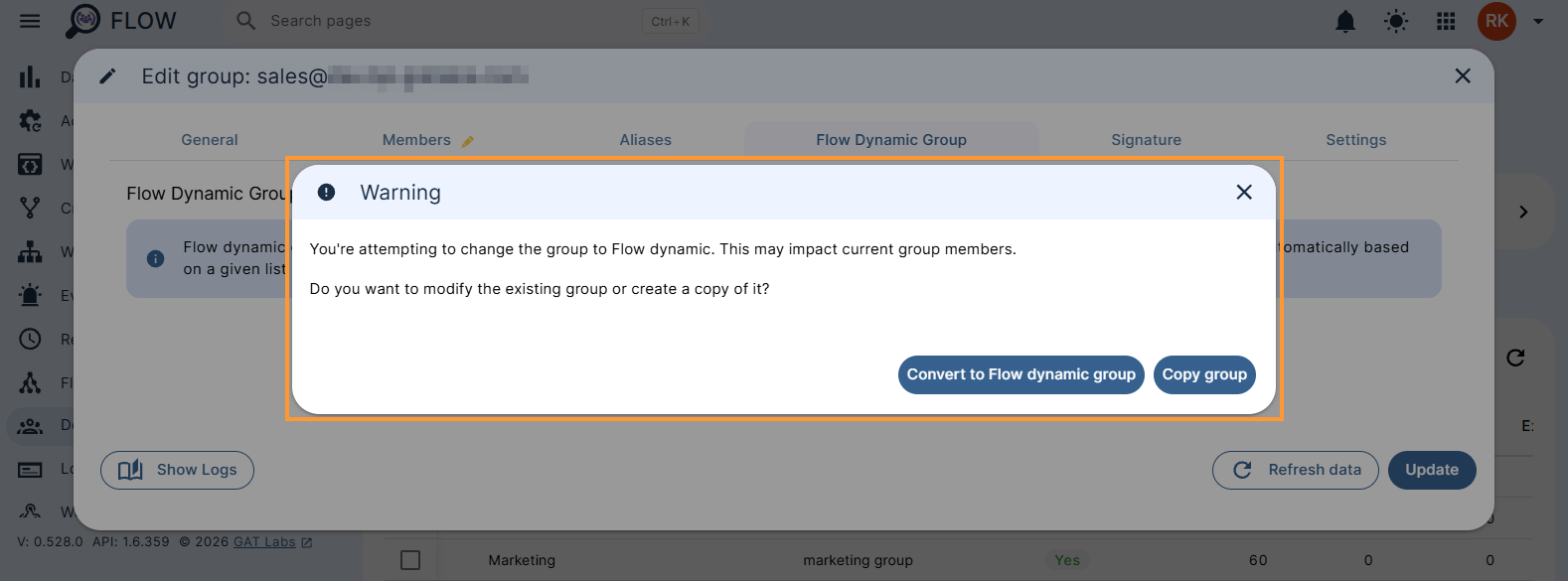
When Enabled the existing Group can be converted into Dynamic Group or copied and used to create a new Dynamic Group
Group Signature #
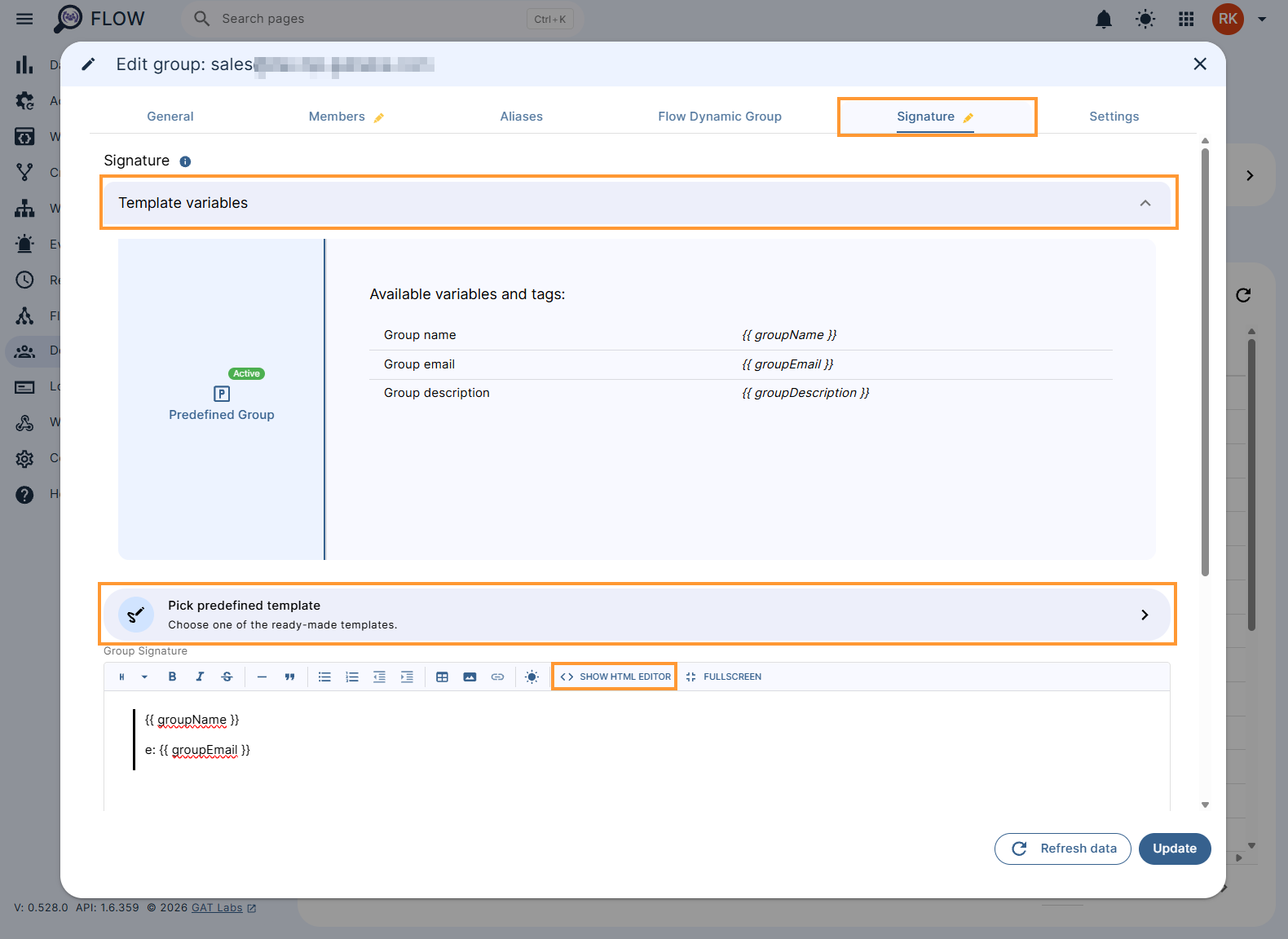
Scrolling further down will give you the option to set up the email signature of the group using HTML code.
You can add the signature via Classic editor, HTML editor and use any of our Signature templates
Group settings configuration #
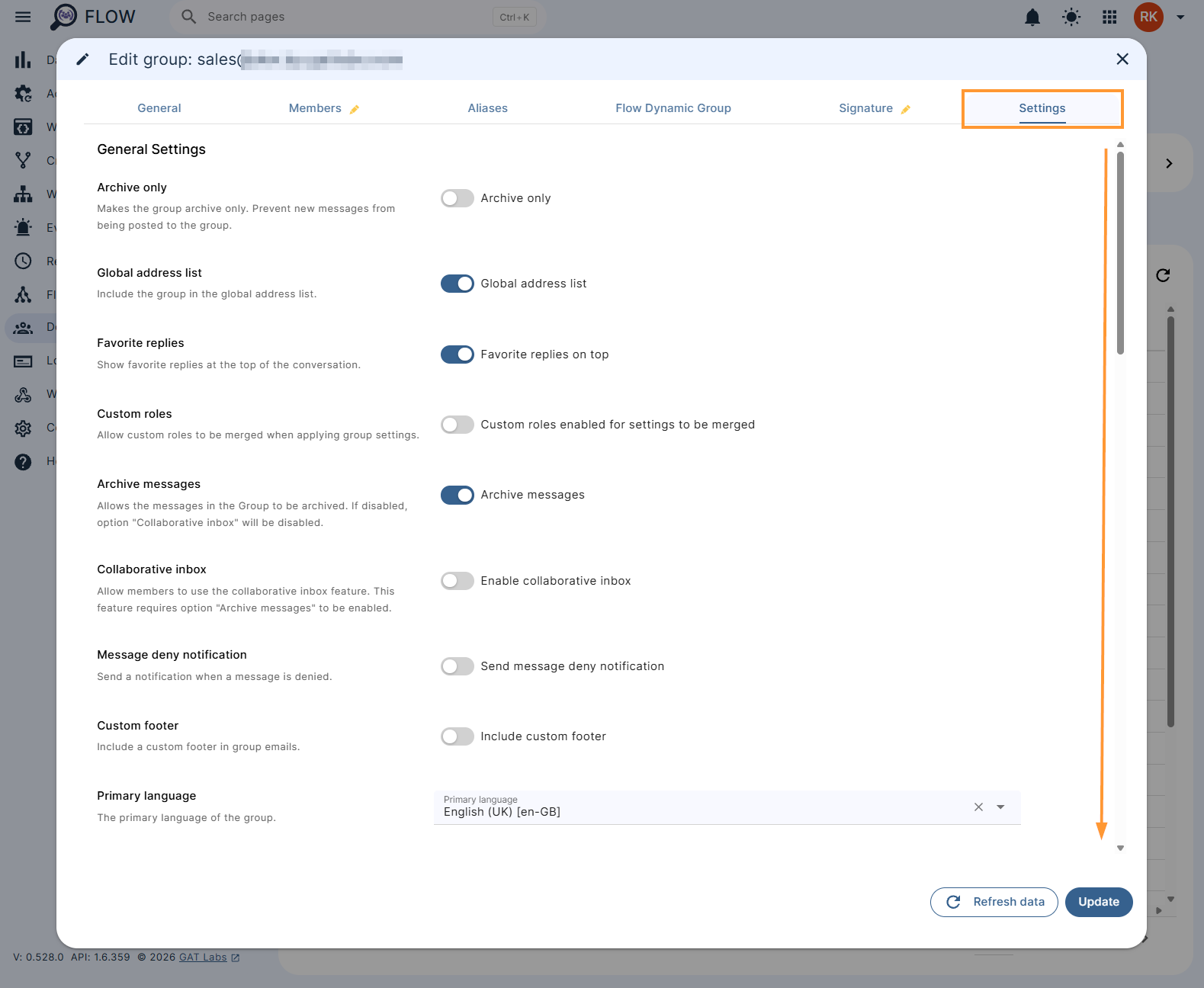
In this section, you can manage group settings by toggling on/off the options as below:
- Archive only – Makes the group archive only. Prevent new messages from being posted to the group.
- Global address list – Include the group in the global address list.
- Favorite replies – Show favorite replies at the top of the conversation.
- Custom roles – Allow custom roles to be merged when applying group settings.
- Archive messages – Allows the messages in the Group to be archived. If disabled, option “Collaborative inbox” will be disabled.
- Collaborative inbox – Allow members to use the collaborative inbox feature. This feature requires option “Archive messages” to be enabled.
- Message deny notification – Send a notification when a message is denied.
- Custom footer – Include a custom footer in group emails.
- Primary Language – The primary language of the group.
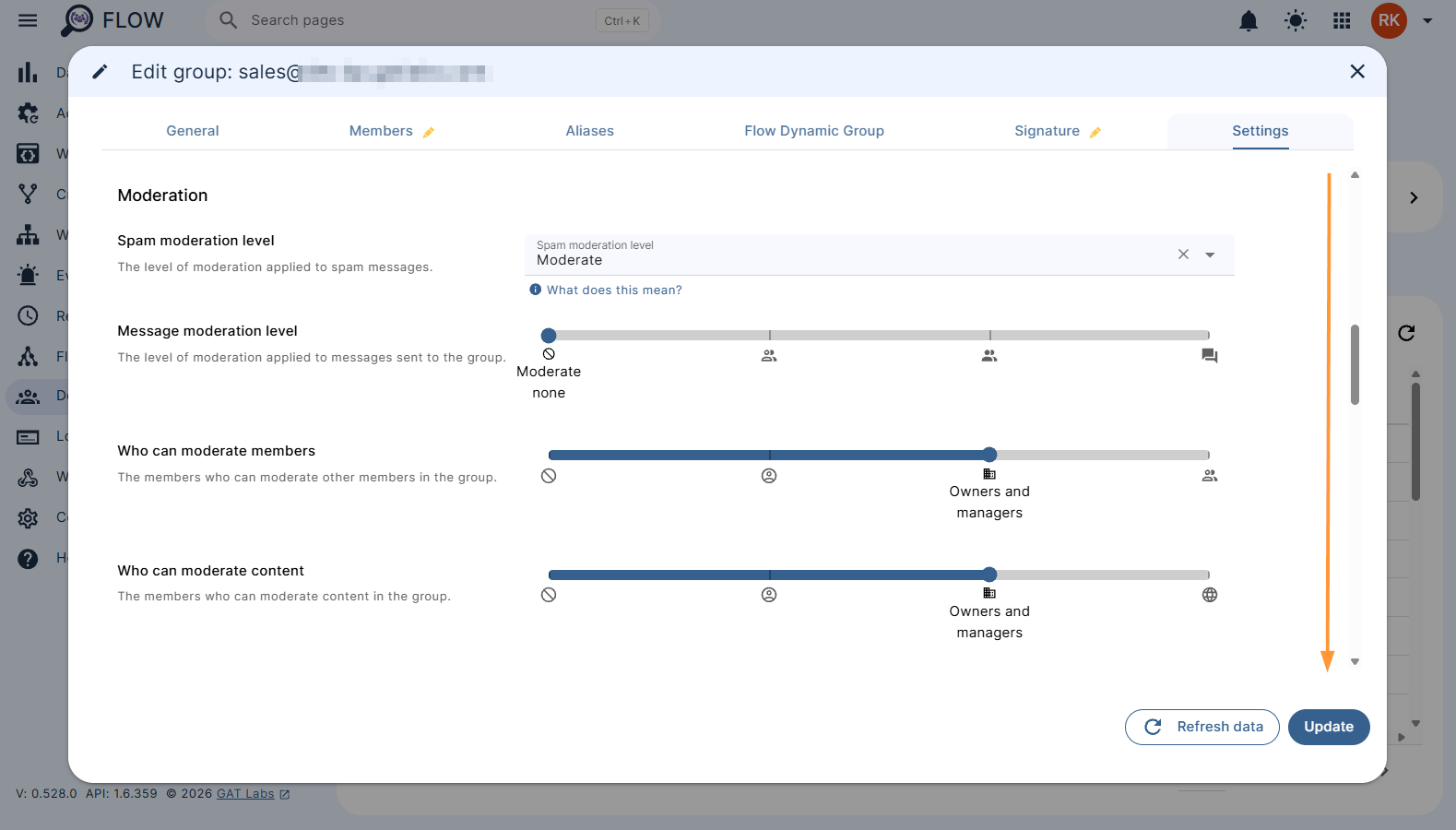
Moderation
- Spam moderation level – The level of moderation applied to spam messages.
- Message moderation level – The level of moderation applied to messages sent to the group.
- Who can moderate members – The members who can moderate other members in the group.
- Who can moderate content – The members who can moderate content in the group.
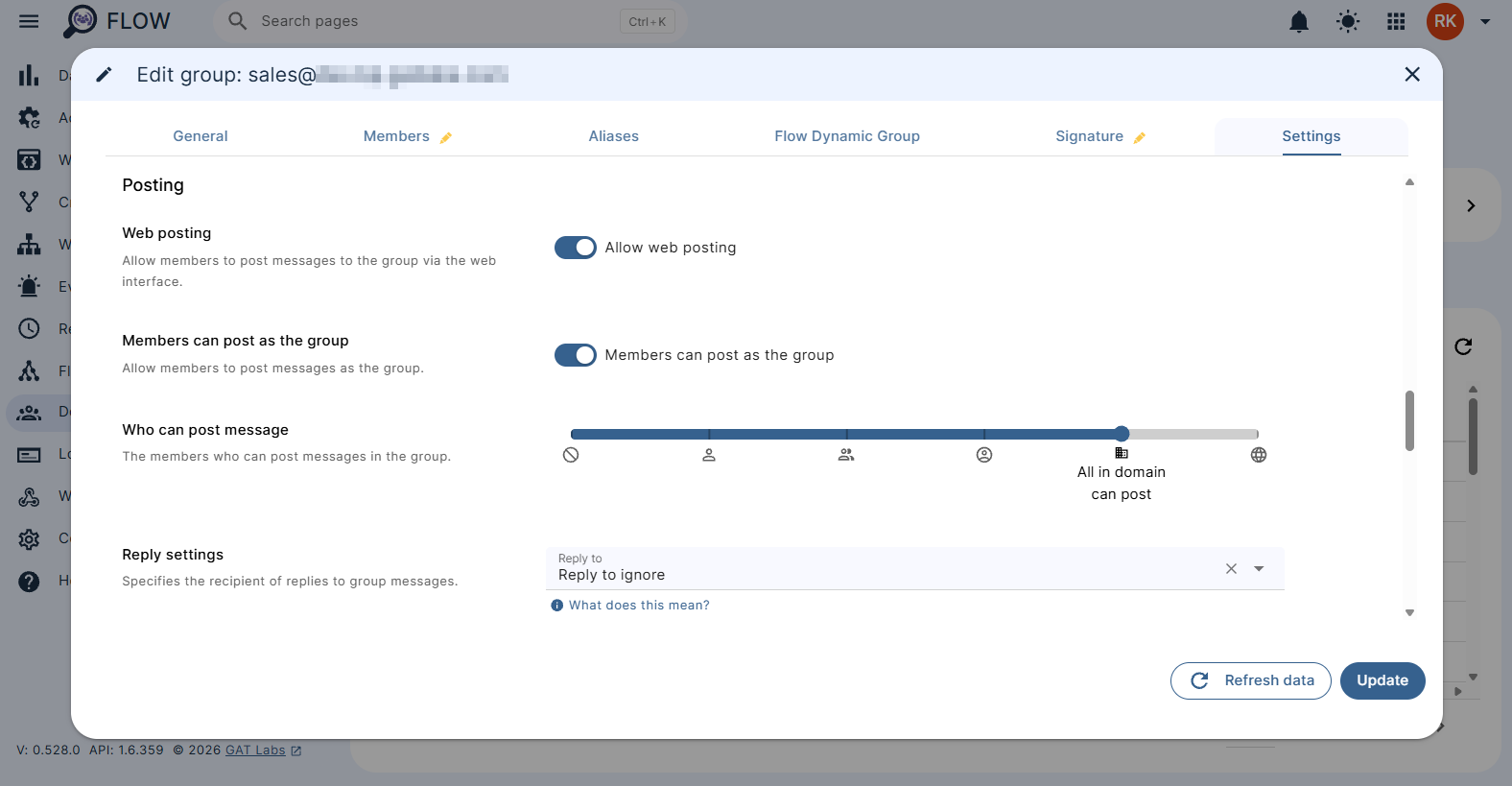
Posting
- Web posting – Allow members to post messages to the group via the web interface.
- Members can post as the group – Allow members to post messages as the group.
- Who can post message – The members who can post messages in the group.
- Reply settings – Specifies the recipient of replies to group messages.
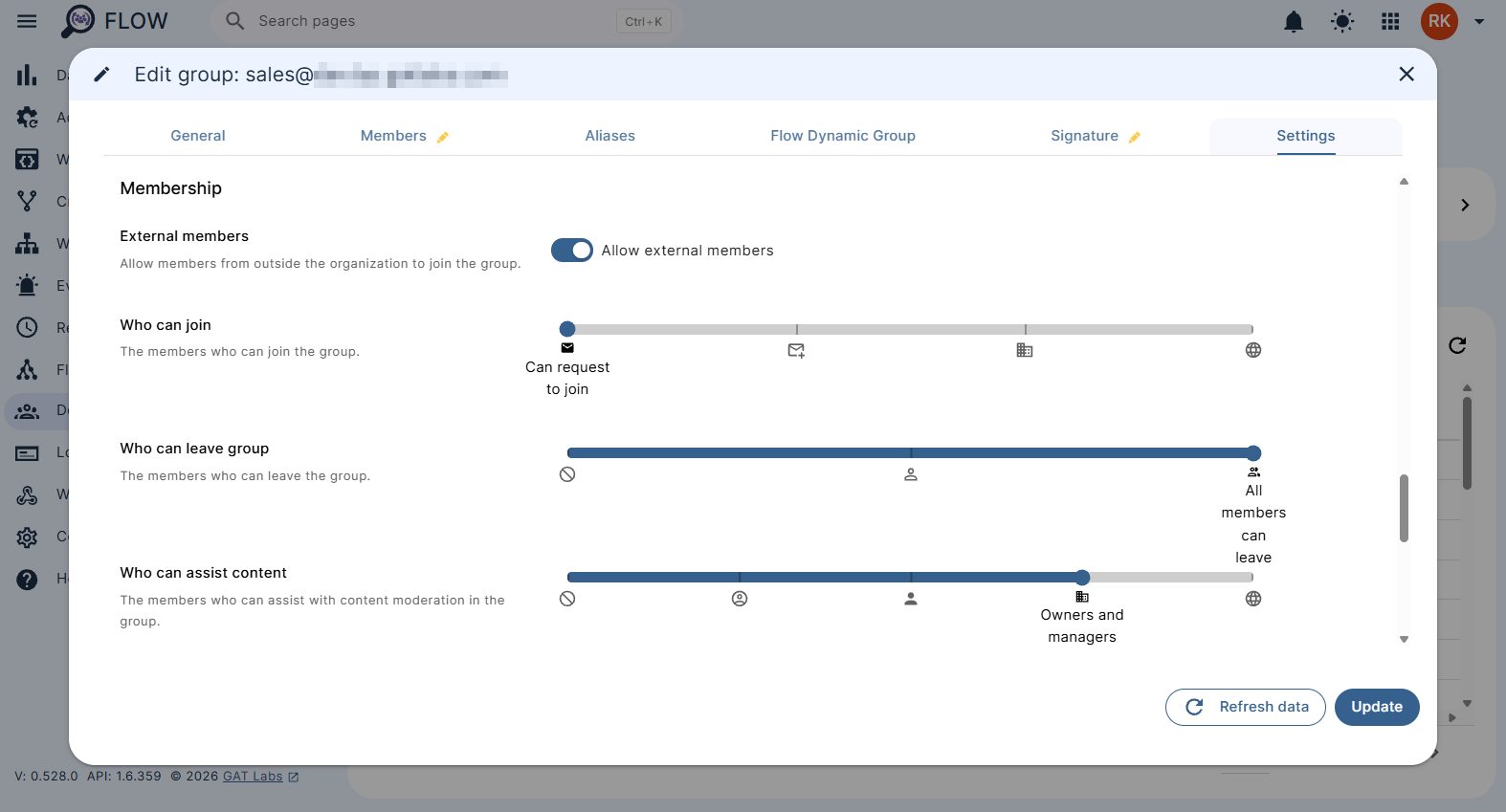
Membership
- External members – Allow members from outside the organization to join the group.
- Who can join – The members who can join the group.
- Who can leave group – The members who can leave the group.
- Who can assist content – The members who can assist with content moderation in the group.
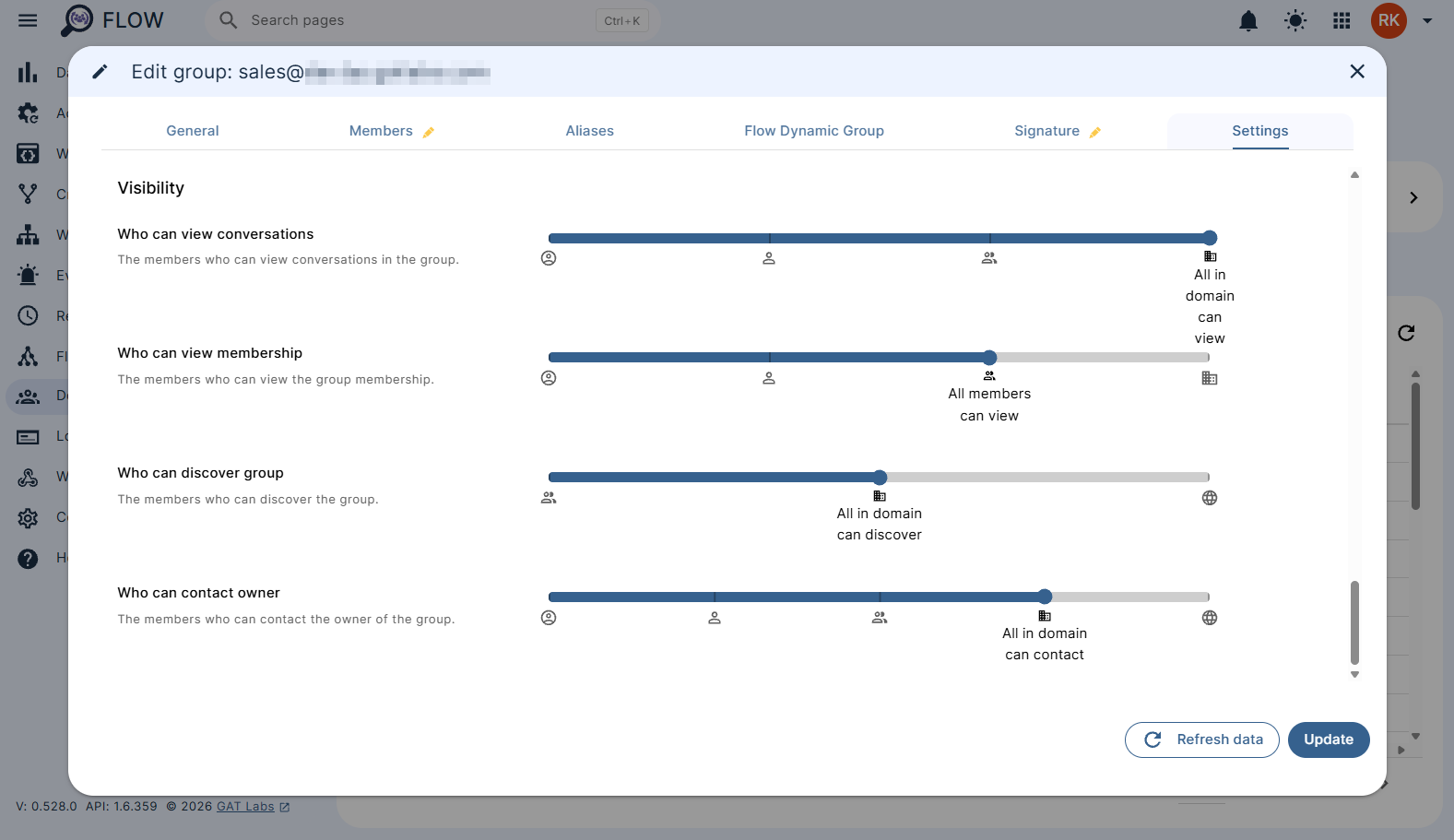
- Who can view conversations – The members who can view conversations in the group.
- Who can view membership – The members who can view the group membership.
- Who can discover group – The members who can discover the group.
- Who can contact owner – The members who can contact the owner of the group.
Result #
Edit any of the options available in the Group audit in Flow and click on the Update button.


